Utkaṭakoṇāsana (Seated Goddess Pose): Classical Sources, Anatomy, Alignment & Evidence-Based Guide
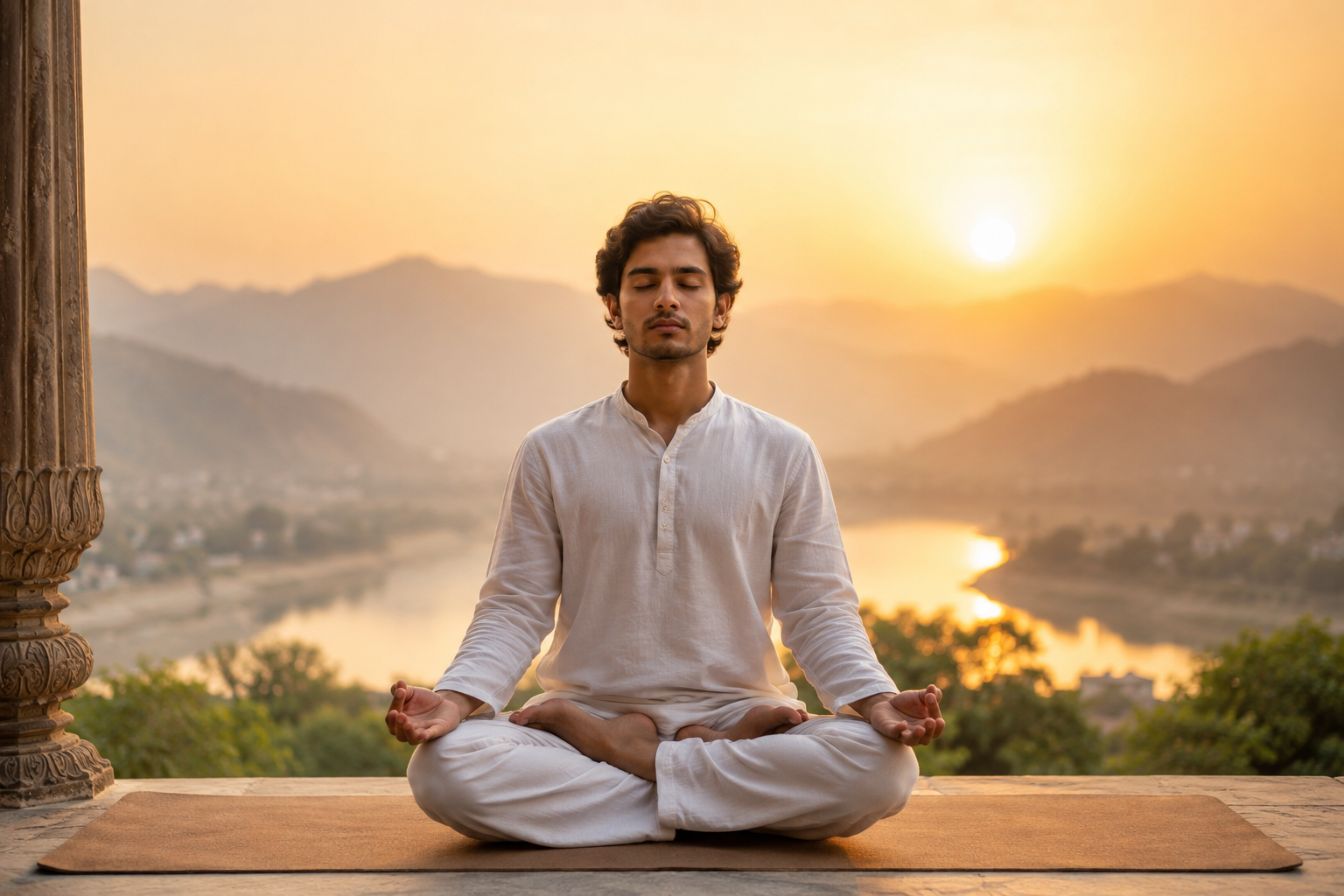
Utkaṭakoṇāsana (Seated Goddess Pose / Fierce Angle Pose): The Complete Reference Guide
Editorial note, stated once: throughout this article, traditional yogic and Āyurvedic claims (chakra, prāṇa, dosha associations) are presented as traditional belief, not scientific fact, unless a specific evidence source is cited alongside them.
Name & Meaning
- Sanskrit: उत्कटकोणासन (Utkaṭakoṇāsana) or उपविष्ट उत्कटकोणासन (Upaviṣṭa Utkaṭakoṇāsana)
- IAST Transliteration: Utkaṭakoṇāsana / Upaviṣṭa Utkaṭakoṇāsana
- English: Seated Goddess Pose / Seated Fierce Angle Pose
- Etymology: Utkaṭa (fierce, immense, powerful, or unequal) + Koṇa (angle) + Āsana (posture / seat). Upaviṣṭa denotes "seated" or "seated upon the floor/chair." "The seated posture forming a powerful, wide-angled pelvic and hip opening."
Introduction
- While modern 20th-century postural yoga predominantly teaches Utkaṭakoṇāsana as a standing wide-legged squat (Goddess Pose), traditional and restorative yoga methodologies feature a grounded Seated Utkaṭakoṇāsana (Upaviṣṭa Utkaṭakoṇāsana).
- Characterized by establishing a wide external rotation of the hip joints while seated grounded on the floor, bolster, or chair, maintaining bent knees stacked over ankles at 90-degree angles, an erect vertical spine, and open chest with arms in Añjali Mudrā or Cactus/Field-Goal arms.
- Translates the intense pelvic floor opening and hip adductor stretch of standing Goddess Pose into an unyielding, restorative, or deeply meditative seated posture.
- Functions as an exceptional diagnostic and therapeutic posture for evaluating femoral abduction, adductor magnus extensibility, pelvic floor tone, and sacral alignment.
Benefits
- Physical: Deeply stretches the hip adductors (adductor magnus, longus, brevis, gracilis, pectineus) and groin flexors; mobilizes the hip acetabular sockets; relaxes the pelvic diaphragm.
- Pelvic Floor & Reproductive Health: Sustained wide abduction without the gravitational load of standing allows deep relaxation and conscious engagement of the levator ani and pelvic floor musculature.
- Postural Restoration: Eliminates lower limb fatigue while preserving upright axial spinal extension, helping counteract habitual sitting posture when practiced on a cushion or chair.
- Mental & Neurological: Grounding the pelvis while expanding the chest lowers sympathetic nervous arousal, encouraging parasympathetic dominance and emotional grounding.
- Traditional/Spiritual: Believed in traditional Haṭha Yoga to activate the Mūlādhāra (root) and Svādhiṣṭhāna (sacral) chakras, awaken feminine creative energy (Śakti), and ground Apāna Vāyu—traditional belief, not a scientific claim.
How to Practice Seated Utkaṭakoṇāsana: Step-by-Step
| Step | Action | Breath | Teacher Cue |
|---|---|---|---|
| 1 | Begin seated on a mat, cushion, or sturdy chair with back straight and feet grounded flat on the floor. | Natural breath | "Root firmly through your sit-bones and grow tall through your crown." |
| 2 | Inhale, externally rotate the hips and walk feet out wide so knees bend at roughly 90 degrees with heels turned in and toes pointing outward at 45 degrees. | Inhale to widen legs | "Open your knees wide so each kneecap tracks in line with your second toe." |
| 3 | Adjust sit-bones so the pelvis rests in a neutral position (not rolling backward onto the tailbone). Elevate hips on a cushion if lower back rounds. | Exhale to settle pelvis | "Tilt your pelvis softly forward so your lower spine maintains its natural curve." |
| 4 | Bring palms together at heart center in Añjali Mudrā, or extend elbows out at shoulder height with forearms vertical (Cactus / Field-Goal arms). | Inhale to set arms | "Lift your sternum high and broaden across your collarbones." |
| 5 | Engage core abdominal flexors softly, draw shoulder blades down the back, and gaze softly forward at eye level. Hold for 5 to 10 deep breaths. | Slow, diaphragmatic breathing | "Breathe deeply into your pelvic floor and lower belly." |
| 6 | Exhale, lower hands to thighs, gently draw knees back to center, and return to a neutral seated position (e.g., Daṇḍāsana or Chair Mountain Pose). | Exhale to release | "Guide your knees together with care and mindfulness." |
Common Mistakes & Corrections
- Knees collapsing inward (valgus collapse): Weakness in outer hip rotators causes knees to cave inside the toe line, putting strain on inner knee ligaments → Correction: Press knees gently outward so kneecaps point in the exact same direction as second toes.
- Slouching lower back (posterior pelvic tilt): Rolling backward onto the sacrum flattens the natural lumbar lordosis → Correction: Elevate hips on a firm cushion or block until pelvis tilts forward naturally.
- Scrunching shoulders into ears: Tensing trapezius while holding Cactus arms → Correction: Draw shoulder blades down the back and broaden collarbones.
- Holding breath in pelvic opening: Guarding abdominal wall out of hip tightness → Correction: Maintain soft, deep, diaphragmatic breathing into lower belly.
Contraindications & Precautions
- Acute Groin or Adductor Muscle Tear: Deep femoral abduction stretches healing groin fibers; limit leg width or use bolster support under knees.
- Acute Sacroiliac (SI) Joint Dysfunction: Wide asymmetrical or symmetrical hip abduction can torque SI joint ligaments; practice with narrower stance.
- Severe Hip Impingement (Femoroacetabular Impingement / FAI): Forcing wide abduction can cause bony pinch in hip socket; back off depth.
- Late Pregnancy: Highly beneficial for pelvic opening, but avoid over-stretching due to elevated relaxin hormone levels; practice with stable chair/cushion support.
Sequencing: Preparatory, Follow-up & Variations
- Preparatory Poses: Baddha Koṇāsana (Bound Angle), Upaviṣṭa Koṇāsana (Seated Wide-Angle Forward Fold), Malāsana (Garland Pose).
- Placement in Sequence: Mid-to-late seated sequence or restorative hip-opening block.
- Follow-up Poses: Paschimottānāsana (Seated Forward Bend to close hips), Gomukhāsana (Cow Face Pose for hip adduction counter-pose), Shavāsana.
- Variations: Chair Seated Goddess Pose, Bolster-Supported Seated Goddess Pose, Revolved Seated Goddess Pose (Parivṛtta Upaviṣṭa Utkaṭakoṇāsana).
In more detail: Seated Utkaṭakoṇāsana serves as an ideal bridge between dynamic standing squats and deep restorative hip openers. By removing gravitational load from the legs, it allows practitioners to isolate hip external rotation and pelvic floor breathing. Following Seated Utkaṭakoṇāsana with hip adduction counter-poses like Gomukhāsana balances the inner and outer hip fascial lines.
Modifications
- Beginners / Tight Hips: Sit on a firm yoga block or folded blanket (2–4 inches high) to elevate pelvis; bring feet closer together.
- Chair Modification (Desk / Senior Yoga): Practice sitting on the front edge of a sturdy chair with feet wide and knees bent at 90 degrees.
- Groin Strain / Joint Sensitivity: Place yoga blocks or rolled towels under outer knees to prevent over-stretching inner thighs.
- Shoulder / Arm Fatigue: Rest hands on inner thighs or bring palms together in Añjali Mudrā at heart center rather than holding Cactus arms.
Historical Background & Classical References
- Modern Postural Nomenclature: The specific name Utkaṭakoṇāsana (Goddess Pose / Fierce Angle Pose) is a 20th-century postural nomenclature popularized in modern yoga systems (such as Kripalu, Yin, and Vinyasa Yoga).
- Absence in Medieval Scriptures: The exact posture name Utkaṭakoṇāsana is not found in medieval Haṭha manuals like the Haṭhayogapradīpikā or Gheraṇḍa Saṃhitā. Ancient scriptures categorized wide-angled seated pelvic openers under Bhadrāsana, Gorakṣāsana, or Maṇḍūkāsana.
- Therapeutic Evolution: Traditional seated variations were refined in modern therapeutic yoga (such as Bihar School of Yoga and Iyengar Chair Yoga) to provide pelvic floor benefits without weight-bearing joint stress.
Alignment Principles (Iyengar Method)
- Pelvic Elevation & Neutrality: Sit-bones grounded flat; pelvis tilted slightly anteriorly to preserve lumbar curve.
- Knee-Toe Tracking: Knees bent at 90 degrees; kneecaps tracking directly over second toes, preventing inner collapse.
- Chest Expansion: Sternum lifted, collarbones broad, shoulder blades drawing down back.
- Vertical Column: Crown of head aligned directly over spinal axis.
Anatomy & Biomechanics
- Primary Stretched Muscles: Adductor magnus, adductor longus, adductor brevis, gracilis, pectineus (inner groin), sartorius.
- Primary Strengthening/Stabilizing Muscles: Gluteus medius, gluteus minimus, piriformis, obturator externus, erector spinae, transversus abdominis.
- Joint Mechanics: Femoral head abduction and external rotation at hip acetabulum; 90-degree knee flexion; ankle dorsiflexion; spine in axial extension.
- Pelvic Floor Biomechanics: Wide femoral abduction lengthens the pelvic diaphragm (levator ani). Eliminating standing weight bearing reduces intra-pelvic pressure, allowing controlled eccentric and concentric pelvic floor training.
Nervous System & Breathing Effects
- Parasympathetic Induction: Grounded pelvic stance paired with unhurried diaphragmatic breathing signals vagal tone, dampening sympathetic nervous arousal.
- Pelvic Diaphragmatic Expansion: Deep inhalations lower the thoracic diaphragm, which in turn gently descends and expands the relaxed pelvic floor.
Yogic & Āyurvedic Perspective
- Dosha Impact: Highly effective for pacifying Vāta (grounds nervous anxiety and pelvic restlessness) and soothing Pitta when practiced gently—traditional belief.
- Prāṇa Dynamics: Directs Apāna Vāyu downward into the earth for energetic grounding, while freeing Samāna Vāyu at the navel center.
Therapeutic Applications
| Condition | Mechanism | Research / Precaution |
|---|---|---|
| Pelvic Floor Tightness / Hypertonicity | Non-weight-bearing wide hip abduction allows gentle lengthening and relaxation of pelvic diaphragm muscles | Supported by pelvic physical therapy principles. Precaution: Support knees with blocks if tight. |
| Prenatal Hip Stiffness & Preparation | Opens pelvic outlet and stretches inner thigh adductors safely when supported on chair or bolster | Supported by prenatal exercise literature. Precaution: Avoid over-stretching relaxin-softened ligaments. |
Yoga is never a replacement for medical treatment; serious or persistent conditions require a qualified healthcare professional.
Teaching Cues & Hands-On Adjustments
- Verbal Cues: "Sit high on your cushion and open your knees wide." / "Keep your knees pointing in the exact direction of your toes." / "Breathe deeply all the way down into your pelvic floor."
- Hands-on Adjustment (Safe execution with consent):
- Stand behind student; place hands gently on outer knees/thighs, encouraging subtle external rotation without forcing abduction.
- Place hand lightly at upper back between shoulder blades to cue chest lift and vertical spine.
Myth vs. Fact
| Myth | Fact |
|---|---|
| Utkaṭakoṇāsana can only be practiced as a standing gym squat. | The traditional seated version (Upaviṣṭa Utkaṭakoṇāsana) translates identical pelvic benefits into a grounded, restorative posture. |
| Utkaṭakoṇāsana is an ancient 2,000-year-old scriptural posture. | It is a modern 20th-century postural nomenclature; classical texts categorized similar seated hip openers under Bhadrāsana or Gorakṣāsana. |
| You must push your knees as far back as possible. | Knees should only open as far as your hip sockets allow while keeping knees stacked cleanly over ankles. |
Conclusion
Utkaṭakoṇāsana (Seated Goddess Pose / Fierce Angle Pose) synthesizes pelvic floor relaxation, inner thigh lengthening, and upright spinal alignment into a grounded posture. By eliminating standing weight-bearing stress, the seated variation allows practitioners to safely cultivate hip mobility, nervous system calm, and energetic grounding.
Quick Facts
| Category | Seated hip opener / posture |
| Difficulty Level | Beginner to Intermediate |
| Primary Muscles Stretched | Adductor Magnus, Gracilis, Pectineus, Inner Groin |
| Primary Muscles Strengthened | Gluteus Medius, Erector Spinae, Transversus Abdominis |
| Classical Source? | No (Modern 20th century posture nomenclature) |
| Traditional Chakra (Belief) | Mūlādhāra (Root) & Svādhiṣṭhāna (Sacral) |
| Dosha Impact (Belief) | Pacifies Vāta & Pitta |
Frequently Asked Questions
What does Utkaṭakoṇāsana mean?
Utkaṭa (fierce/powerful) + Koṇa (angle) = Goddess Pose or Fierce Angle Pose.
Is Seated Goddess Pose mentioned in ancient classical texts?
No, Utkaṭakoṇāsana is a modern 20th-century posture nomenclature. Classical texts listed similar seated hip-openers under Bhadrāsana or Gorakṣāsana.
How does Seated Utkaṭakoṇāsana differ from standing Goddess Pose?
Standing Goddess Pose is an intense weight-bearing squat. Seated Goddess Pose is grounded on a mat, cushion, or chair, removing leg weight while retaining pelvic floor opening.
What should I do if my lower back rounds in this pose?
Elevate your pelvis by sitting on a firm yoga block or folded blanket, allowing your hips to tilt forward into neutral alignment.
Can pregnant women practice Seated Utkaṭakoṇāsana?
Yes! Seated Utkaṭakoṇāsana on a chair or bolster is an excellent prenatal posture for opening the pelvic floor gently.
How long should I hold Seated Goddess Pose?
Hold for 5 to 10 deep, relaxed breaths (about 30 to 90 seconds), focusing on soft diaphragmatic breathing.
References
1. Classical Yoga Texts: Modern postural posture nomenclature; absent in medieval manuals (Haṭhayogapradīpikā, Gheraṇḍa Saṃhitā). Similar classical pelvic openers described under Bhadrāsana (Gheraṇḍa Saṃhitā 2.9) and Gorakṣāsana.
2. Modern Yoga Institutions: Bihar School of Yoga publications. Iyengar, B.K.S. (1966). Light on Yoga. Schocken Books. Kripalu & Chair Yoga manuals.
3. Peer-Reviewed Scientific Research:
- Sherman, K. J., et al. (2011). A randomized trial comparing yoga, stretching, and a self-care book for chronic low back pain. Archives of Internal Medicine, 171(22), 2019-2026.
- Ni, M., et al. (2014). Comparative muscle activation patterns during yoga postures in elderly adults. BMC Complementary and Alternative Medicine, 14, 401.
This article is for educational purposes and does not replace individualized medical or physical therapy advice. Consult a qualified healthcare provider before beginning any new practice, especially with a pre-existing health condition.