Ujjāyī Prāṇāyāma (Ocean Breath / Victorious Breath): Complete Anatomy, Vagal Stimulation & Evidence-Based Guide
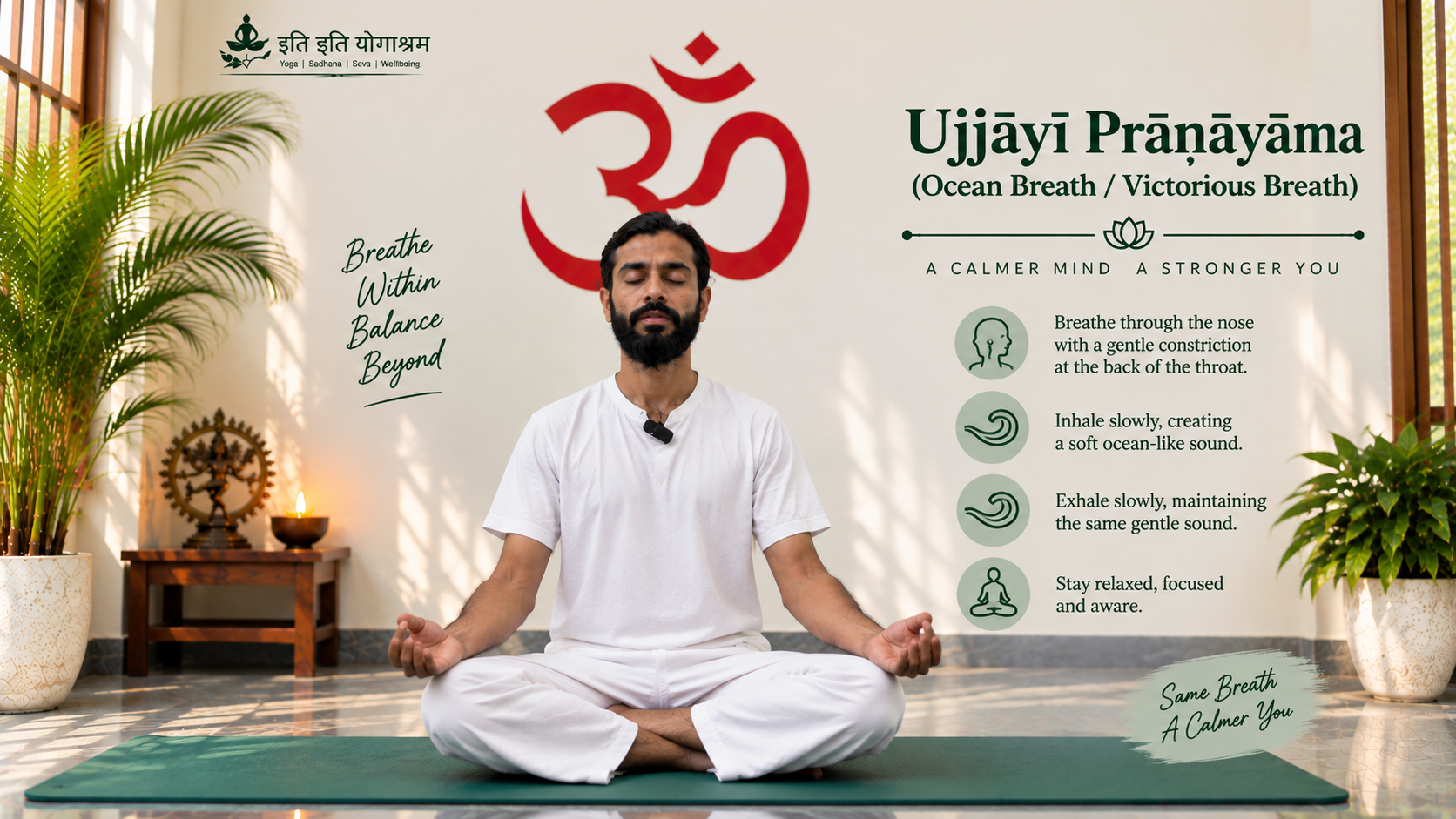
The Definitive Guide to Ujjāyī Prāṇāyāma (Ocean Breath / Victorious Breath): Classical Origins, Vagal Stimulation, and Clinical Applications
Ujjāyī Prāṇāyāma, universally known as "Ocean Breath" or the "Victorious Breath," stands as one of the most widely practiced, soothing, and foundational respiratory techniques within the Hatha Yoga and Vinyasa matrix. Derived from the Sanskrit prefix ut (meaning upward or superior), jī (meaning to conquer or gain victory), and prāṇāyāma (breath control or life-force expansion), this technique utilizes a subtle partial constriction of the glottis during nasal inhalation and exhalation to create a soft, audible, ocean-like sound. This comprehensive manual synthesizes classical scriptural frameworks with modern respiratory physiology and peer-reviewed biomedical research, serving as a definitive reference for yoga teachers, therapists, and practitioners at all levels.
1. Comprehensive Benefits of Ujjāyī Prāṇāyāma
Physical & Structural Benefits
- Parasympathetic Nervous System Activation: Glottal resistance and rhythmic breathing stimulate the vagus nerve, reducing heart rate and blood pressure.
- Internal Thermogenesis and Core Awareness: Generates internal friction heat, warming incoming air and building focused somatic mindfulness throughout physical asana practice.
- Enhanced Pulmonary Ventilation: Increases intra-thoracic pressure regulation, optimizing oxygen uptake and carbon dioxide elimination across deep lung tissues.
- Pharyngeal and Laryngeal Toning: Gently engages the muscles of the throat and vocal cords, improving respiratory muscular control.
Mental & Emotional Benefits
- Deep Mental Anchoring and Focus: The rhythmic, whispering sound of the breath provides an acoustic anchor that quiets racing thoughts and emotional agitation.
- Anxiety and Stress Dampening: Calms the amygdala-driven stress response, fostering a state of tranquil alertness and emotional equilibrium.
Spiritual & Subtle Energy Benefits
- Consolidation of Prāna: Traditional texts note that Ujjāyī internalizes vital energy, preventing its dissipation and directing it toward deep spiritual concentration. Traditional yogic belief; scientific evidence is limited.
- Stimulation of Viśuddha Chakra: Energetic focus centered in the throat region stimulates the fifth chakra, enhancing clear communication and inner truth. Traditional yogic belief; scientific evidence is limited.
2. Step-by-Step Practice Guide
To experience the full physiological and energetic benefits of Ujjāyī safely while safeguarding the vocal cords and cervical spine, execute using these precise progressive stages:
-
The Seated Foundation and Throat Awareness Setup
- Action: Sit in a comfortable meditative posture (such as Padmāsana, Siddhāsana, or Sukhasana) with an upright spine, open chest, and relaxed shoulders. Alternatively, practice Ujjāyī seamlessly while moving through dynamic asana sequences.
- Breathing: Take a few normal, unforced breaths to establish physical relaxation.
- Alignment: Keep your head balanced neutrally atop your spine; tuck your chin very slightly downward toward your chest (Jalandhara Bandha preparation) without collapsing your throat.
- Common Mistake: Thrusting the chin forward or slouching the upper back.
- Correction: Stack your ears directly over your shoulders and maintain a tall, open chest.
- Teacher Cue: "Sit tall, soften your jaw, and bring your awareness directly to the back of your throat."
-
The Glottal Constriction Mechanism (The Whispering Sound)
- Action: Inhale and exhale slowly through your nose while gently constricting the back of your throat (the glottis)—much like the muscular action you use when whispering a soft breath sound on a foggy mirror, but keeping your mouth completely closed. The resulting sound should resemble the gentle murmur of ocean waves.
- Breathing: Ensure the breath remains smooth, continuous, and unforced on both inhalation and exhalation.
- Alignment: Keep your facial muscles, jaw, and tongue completely relaxed; avoid clenching your teeth or tightening your neck.
- Common Mistake: Forcing the breath too loudly by squeezing the throat muscles too tightly, causing vocal strain.
- Correction: Soften the constriction so the sound is a delicate, soothing whisper audible only to you.
- Teacher Cue: "Constrict your throat gently as if whispering on a mirror, creating a soft ocean sound through your nose."
-
Sustaining the Rhythm and Ratio Integration
- Action: Maintain the ocean sound continuously as you inhale and exhale evenly through your nose. Aim for an equal 1:1 inhalation-to-exhalation ratio, or extend the exhalation slightly longer if practicing seated meditation. Practice for 5 to 10 minutes or throughout your asana flow.
- Breathing: Keep the airflow steady and unbroken; never let the breath catch or stutter in your throat.
- Alignment: Keep your diaphragm driving the breath while your throat provides only subtle acoustic resistance.
- Common Mistake: Holding the breath or breathing shallowly into the upper chest.
- Correction: Anchor your breath deeply into your lower ribs and abdomen.
- Teacher Cue: "Let your ocean breath flow continuously like waves rolling onto a shore—smooth, steady, and unhurried."
-
The Mindful Completion and Release
- Action: To conclude your practice, release the subtle glottal constriction and allow your breath to return to its natural, silent, unmanipulated rhythm. Sit in quiet observation for 1 to 2 minutes.
- Breathing: Notice the internal silence and stillness following the ocean sound.
- Alignment: Maintain your upright posture during integration.
- Common Mistake: Abruptly jumping back into high-stimulus activity without integration.
- Correction: Transition slowly, retaining your calm centered awareness.
- Teacher Cue: "Release the throat constriction, return to silent breathing, and absorb the deep calm within."
3. Common Alignment Mistakes & Technical Corrections
Avoiding technical compensation patterns is essential to prevent laryngeal strain and ensure effective nervous system calming:
| Identified Mistake | Anatomical Consequence | Biomechanical Correction |
|---|---|---|
| Over-Constricting the Throat Muscles | Generates harsh, raspy breathing sounds, throat irritation, and vocal cord fatigue. | Soften the glottal constriction so the breath sounds like a gentle, distant ocean whisper. |
| Clenching the Jaw and Facial Muscles | Transfers tension into the cervical spine and temporomandibular joint (TMJ). | Relax your jaw completely, parting your teeth slightly inside your closed mouth. |
| Breathing Exclusively into the Upper Chest | Shortens tidal volume and prevents full diaphragmatic engagement. | Direct your inhalation downward so your lower ribs and abdomen expand fully. |
| Forcing Exhalations Too Long | Induces air hunger, panic, and sympathetic nervous system spikes. | Keep your inhalation and exhalation balanced and comfortable without strain. |
Figure 1: Biomechanical glottal constriction map illustrating partial airflow resistance creating the signature ocean sound in Ujjāyī Prāṇāyāma.
4. Contraindications & Precautions
While exceptionally safe and widely adaptable, Ujjāyī should be modified or avoided under the following conditions:
- Acute Vocal Cord Strain or Laryngitis: Constricting inflamed or strained vocal cords can aggravate healing tissue; practice silent diaphragmatic breathing instead.
- Severe Asthma or Acute Panic Attacks: Forcing glottal resistance during active breathlessness can increase respiratory distress; relax the throat completely.
- Extreme Fatigue or Depressive States: Deep internalizing practices without energetic uplift can sometimes heighten lethargy; balance with uplifting breathwork if needed.
5. Intelligent Sequencing Protocols
Sequencing Summary Matrix
- Preparatory Asanas & Practices: Comfortable seated posture (Sukhasana, Padmasana) or initial centering in Tadasana; basic diaphragmatic breathing.
- Follow-up Counter Practices: Silent unconstrained breathing, Shavasana (Corpse Pose), or quiet seated meditation.
- Key Progressions & Variations: Progression from seated Ujjāyī to continuous integration throughout dynamic Vinyasa or Ashtanga yoga asana flows.
- Structural Integration: Positioned as the foundational breath accompanying a complete physical asana practice, or used as a calming standalone meditation breath.
Comprehensive Sequencing Context
An effective yoga practice integrates breath and movement seamlessly. Ujjāyī serves as the premier continuous breath for dynamic asana practice. Maintaining the ocean sound throughout physical postures anchors the mind, regulates internal heat, and keeps the nervous system balanced between effort and surrender.
6. Strategic Modifications for Special Populations
Yoga should adapt to the unique physiological needs of the individual body. Use these specialized modifications to keep the practice accessible and therapeutic:
-
For Beginners or Practitioners with Throat Tension:
- Practice making a soft whispering breath sound with an open mouth on the exhale, then close the mouth and recreate that exact same texture through the nose with minimal muscular effort.
-
For Seniors or Chair Practitioners:
- Sit upright in a stable chair with feet flat on the floor, maintaining a tall, comfortable spine while practicing smooth ocean breathing.
-
During Restorative or Yin Yoga:
- Soften the glottal constriction completely into a gentle whisper, or release Ujjāyī entirely in favor of slow, natural breathing to support deep relaxation.
7. Historical Background & Classical Scriptural References
Ujjāyī holds a prominent position within classical Hatha Yoga literature, recognized as a master breath that revitalizes the body and stills the mind.
Classical Scriptural Context
Scripturally referenced in the Hatha Yoga Pradipika (Chapter 2, Verses 51–53) and the Gheranda Samhita, Ujjāyī is praised for eliminating phlegm in the throat, stoking internal digestive fire, and preventing bodily decay and disease. Classical texts emphasize that it can be practiced while walking or standing as well as seated.
Modern Institutional Refinements
Modern yoga institutions and medical research centers have extensively studied Ujjāyī, confirming its role in stimulating the vagus nerve, improving parasympathetic autonomic balance, and enhancing cardiovascular efficiency during stress.
8. Biomechanical and Anatomical Analysis
Primary Movers and Muscle Actions
- Intrinsic Laryngeal Muscles (Thyroarytenoid and Cricothyroid): Provide subtle, controlled partial closure of the glottis.
- Respiratory Diaphragm: Drives smooth inhalation and exhalation against the gentle acoustic resistance of the throat.
- Intercostal and Abdominal Muscles: Regulate thoracic expansion and intra-abdominal pressure harmoniously.
- Cervical Postural Muscles: Maintain a neutral, upright neck position without hyperextending or straining.
Biomechanics and Physiological Pathways
- Airway Warming and Humidification: Glottal turbulence increases air mixing and thermal exchange, delivering warm, moistened air directly to alveolar tissues.
9. Systemic Physiological Effects
- Nervous System: Stimulates vagal nerve pathways, enhancing parasympathetic tone, reducing heart rate, and calming stress hormone output.
- Respiratory System: Optimizes ventilation-perfusion matching, increases airway pressure regulation, and conditions respiratory musculature.
- Cardiovascular System: Lowers resting blood pressure and improves heart rate variability (HRV) through rhythmic autonomic modulation.
- Endocrine System: Regulates metabolic output and supports internal thermal equilibrium during physical exertion.
10. Clinical Research & Therapeutic Applications
Modern cardiology, neuroscience, and respiratory medicine provide strong evidence supporting the therapeutic value of Ujjāyī breathing:
- Autonomic Regulation and Vagal Stimulation Trials: Clinical research demonstrates that slow, resistance-based breathing techniques like Ujjāyī significantly enhance vagal nerve activity, reduce sympathetic stress reactivity, and improve cardiovascular recovery profiles.
- Disclaimer: The therapeutic applications discussed here are meant for educational purposes and to support overall wellness. They are not a replacement for professional medical diagnosis, targeted advice, or customized clinical treatment plans. Always consult a qualified healthcare provider when managing chronic cardiovascular or respiratory conditions.
11. Teaching Methodology: Cues and Adjustments
Verbal & Imagery Cues
- "Sit tall or stand in your posture, soften your jaw, and bring your awareness to the back of your throat."
- "Imagine whispering a soft breath sound onto a foggy mirror with your mouth closed, creating a gentle ocean wave sound through your nose."
- "Let your breath flow smoothly like rolling ocean waves—steady, effortless, and continuous."
Safe, Non-Invasive Hands-On Adjustments
- Postural and Acoustic Awareness: Teachers can guide students by sitting nearby and modeling the soft whisper sound, or placing gentle verbal focus on relaxing the jaw and neck.
- Safety Note: Never touch or press on a student's throat or neck. Keep all cues entirely verbal and focused on gentle relaxation.
12. Myth vs. Fact Analysis
- Myth: Ujjāyī breath should sound harsh, loud, and raspy so everyone in the room can hear you.
- Fact: Forcing a loud, harsh sound strains the vocal cords and causes throat irritation. Ujjāyī should be a soft, subtle whisper audible primarily to yourself.
- Myth: Ujjāyī is only meant to be used during strenuous Vinyasa yoga asana practice.
- Fact: While fantastic for asana, classical texts and modern teachers recommend Ujjāyī as a powerful seated pranayama and meditation anchor.
Quick Reference Facts Table
| Sanskrit Name | Ujjāyī Prāṇāyāma (उज्जायी प्राणायाम) |
| English Name | Ocean Breath / Victorious Breath |
| Difficulty Level | Beginner to Advanced (Accessible foundation with lifelong refinement) |
| Primary Physiological Focus | Vagal Nerve Stimulation, Parasympathetic Activation, Autonomic Balance |
| Primary Respiratory Mechanics | Glottal Constriction, Diaphragmatic Pacing, Rhythmic Nasal Airflow |
| Traditional Subtle Focus | Viśuddha Chakra (Throat Center) & Internal Prana Conservation |
| Ayurvedic Constitution Impact | Balances all three doṣas (Vāta, Pitta, Kapha); warms Vāta and calms Pitta |
Frequently Asked Questions (FAQ)
Q1: What is the literal meaning of Ujjāyī?
A: Ujjāyī translates to "victorious" or "conquering," signifying the mastery over breath, energy, and mind achieved through the practice.
Q2: Why is Ujjāyī called "Ocean Breath"?
A: The partial glottal constriction creates a soft, whispering sound that closely resembles the gentle rhythm of ocean waves rolling onto a shore.
Q3: How do I know if I am constricting my throat too much?
A: If your throat feels scratchy, dry, or tired, or if your breath sounds loud and harsh to people across the room, you are constricting too tightly. Soften the effort.
Q4: Can Ujjāyī be practiced throughout a physical yoga class?
A: Yes! Ujjāyī is the signature continuous breath used in Vinyasa, Power, and Ashtanga yoga to maintain focus, regulate heat, and stabilize the nervous system.
Q5: Does Ujjāyī breathing stimulate the vagus nerve?
A: Yes. The combination of slow diaphragmatic pacing, rhythmic breath, and pharyngeal acoustic vibration stimulates vagal nerve endings, promoting parasympathetic relaxation.
Q6: Should my mouth be open or closed during Ujjāyī?
A: Your mouth should remain gently closed with your teeth slightly parted inside, and all inhalation and exhalation should occur exclusively through your nose.
Q7: Can beginners practice Ujjāyī safely?
A: Absolutely. With gentle guidance to keep the throat relaxed, beginners can master Ujjāyī safely and incorporate it into their daily practice immediately.
Q8: What should I do if my throat feels dry during long practice sessions?
A: Take a sip of water, soften your glottal constriction, and ensure you are breathing smoothly without excessive air turbulence.
Q9: Is Ujjāyī safe during pregnancy?
A: Yes, gentle Ujjāyī practiced without strain or breath retention is very calming and safe for pregnant practitioners when kept comfortable and unforced.
Q10: How does Ujjāyī affect internal body heat?
A: The subtle resistance created by the glottis increases respiratory muscular work and air friction, generating a gentle internal warmth (tapas).
Q11: Can Ujjāyī help reduce anxiety and racing thoughts?
A: Yes. The acoustic biofeedback of the ocean sound acts as a powerful anchor for the wandering mind, effectively quieting stress and mental chatter.
Q12: Should exhalation be longer than inhalation in Ujjāyī?
A: You can practice a balanced 1:1 ratio for asana stability, or extend the exhalation slightly longer during seated meditation to enhance parasympathetic calm.
Q13: What time of day is best to practice Ujjāyī?
A: It can be practiced anytime—during your morning asana routine, during stressful workday moments, or in the evening to unwind before sleep.
Q14: How do I transition out of Ujjāyī at the end of practice?
A: Simply let go of the throat constriction, close your mouth, and allow your breath to drop into silent, natural, unmanipulated rhythm.
Refine your breathwork technique and deepen your personal practice under expert guidance.
Connect with Iti Iti Yogashram