Tirumalai Krishnamacharya Biography: The Father of Modern Yoga and Master Healer
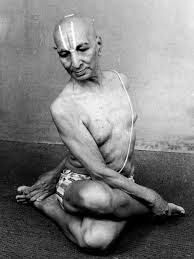
Tirumalai Krishnamacharya Biography: The Father of Modern Yoga and Master Healer
Explore the extraordinary life, scholarship, teaching lineage, and enduring legacy of Tirumalai Krishnamacharya — widely hailed as the Father of Modern Yoga who trained legends like B.K.S. Iyengar and Pattabhi Jois.
Introduction
If you unroll a yoga mat anywhere in the world today and flow dynamically through postures synchronized with your breath, or if you adjust a posture with therapeutic precision, you are participating in a lineage that traces directly back to a single, formidable scholar-sage in southern India. Long before yoga became a global fitness phenomenon, this master revived, synthesized, and restructured the ancient traditions of Hatha Yoga into a dynamic, adaptable science tailored to the modern human condition.
That master was Tirumalai Krishnamacharya, universally revered today as the "Father of Modern Yoga."
As a brilliant polymath holding degrees in all six Vedic philosophical systems, an accomplished Ayurvedic physician, and an uncompromising yoga guru, Krishnamacharya spent a century on earth shaping the trajectory of physical culture and spiritual healing. Operating under the royal patronage of the Mysore Palace during the 1930s, he trained the very teachers who exported yoga to the Western world — including B. K. S. Iyengar, K. Pattabhi Jois, Indra Devi, and his own son T. K. V. Desikachar. Yet, within his homeland, he was equally revered as a master healer who seamlessly blended Ayurveda with yoga therapy.
This is the comprehensive story of Tirumalai Krishnamacharya — tracing his century-long journey from an orthodox Vedic scholar in rural Karnataka to the foundational architect of modern yoga.
Quick Information Table
| Field | Details |
|---|---|
| Full Name | Tirumalai Krishnamacharya |
| Known As | Father of Modern Yoga, Master Healer, Scholar of the Six Darshanas |
| Birth (Date & Place) | November 18, 1888, Muchukundapura, Chitradurga district, Karnataka, India |
| Death (Date & Place) | February 28, 1989 (aged 100), Madras (Chennai), Tamil Nadu, India |
| Parents | Tirumalai Srinivasa Tatacharya and Ranganayakiamma |
| Key Guru / Mentor | Sri Ramamohan Brahmachari (Tibet) |
| Major Institutions | Yogashala at the Mysore Palace (1933–1950), Krishnamacharya Yoga Mandiram, Chennai |
| Yoga Tradition | Vinyasa Krama Yoga, Viniyoga, Classical Hatha and Raja Yoga |
| Nationality | Indian |
| Profession / Role | Scholar, Yoga Teacher, Ayurvedic Healer, Philosopher |
| Major Achievements | Revitalization of Hatha yoga, development of vinyasa breath-movement synchronization, training global yoga pioneers |
| Famous Books | Yoga Makaranda (1934), Yogaasanagalu (c. 1941), Yoga Rahasya, Yogavalli (1988) |
| Official Repository / Legacy | Krishnamacharya Yoga Mandiram (kym.org) |
Early Life and Scholarly Rigor
Born on November 18, 1888, in the small village of Muchukundapura in Karnataka, Tirumalai Krishnamacharya came from an orthodox, deeply learned Sri Vaishnava Brahmin family. His father, Tirumalai Srinivasa Tatacharya, was a renowned teacher of the Vedas who began teaching young Krishnamacharya Sanskrit grammar and Vedic chanting before the age of six.
Tragically, Krishnamacharya lost his father when he was only ten years old. Following this loss, he moved to Mysore to live with his grandfather at the Parakala Matha. Possessing an insatiable intellectual curiosity and a prodigious memory, young Krishnamacharya embarked on an epic multi-year educational journey across India.
Over the next decade, he traveled to sacred centers of learning, including Varanasi (Banaras), studying all six classical darshanas (Indian schools of philosophy: Nyaya, Vaisheshika, Samkhya, Yoga, Mimamsa, and Vedanta). He earned numerous academic degrees and titles in logic, theology, Sanskrit grammar, and Vedic philosophy, establishing himself as a formidable intellectual before ever focusing deeply on physical yoga.
The Himalayan Apprenticeship: Training Under Sri Ramamohan Brahmachari
While Krishnamacharya was profoundly learned in scriptural philosophy, his introduction to the living, physical practice of advanced Hatha Yoga came through a legendary apprenticeship.
According to traditional accounts, Krishnamacharya sought out a master of yoga reputed to live in the remote Himalayan foothills of Tibet. He walked on foot for over two months across rugged mountain terrain until he found Sri Ramamohan Brahmachari living in a cave near Mount Kailash.
Accepting Krishnamacharya as a student, Brahmachari tutored him for over seven years. Under this rigorous Himalayan discipline, Krishnamacharya memorized ancient palm-leaf texts such as the mythical Yoga Korunta, mastered thousands of asanas and pranayama techniques, and studied the intricate therapeutic applications of yoga combined with Ayurveda. When his apprenticeship concluded, when asked by his guru what fee (gurudakshina) he could offer, Brahmachari instructed him to return to society, marry, raise a family, and teach yoga to householders — a mandate that would define the rest of Krishnamacharya's life.

The Golden Era: The Mysore Palace Yogashala (1933–1950)
In 1926, the progressive monarch of the Mysore Kingdom, Maharaja Krishna Raja Wadiyar IV, learned of Krishnamacharya’s extraordinary scholarship and healing abilities. Suffering from health ailments, the Maharaja invited Krishnamacharya to Mysore and was so deeply impressed by his demeanor and expertise that he appointed him as an official palace scholar and healer.
On August 11, 1933, under the patronage of the Maharaja, Krishnamacharya opened a yoga school (Yogashala) in the Jaganmohan Palace. This period marks the most dynamic chapter of his teaching career.
At the Yogashala, Krishnamacharya developed and refined what is now known as Vinyasa Krama — the dynamic linking of breath with movement. He taught young boys, palace officials, and visiting seekers a vigorous, athletic style of yoga. Recognizing that students had vastly different bodies, ages, and strengths, he pioneered a fundamental pedagogical principle: "Teach what is appropriate for the individual" (not making the individual fit a rigid posture).
During this Mysore period, he trained his most celebrated disciples, who would go on to introduce yoga to the Western world:
- B. K. S. Iyengar: His brother-in-law, who arrived as a sickly teenager and evolved into the architect of structural alignment and props.
- K. Pattabhi Jois: Who studied under him for decades and developed the athletic, sweat-inducing Ashtanga Vinyasa Yoga system.
- Indra Devi: Who became the "First Lady of Yoga," bringing soft Hatha yoga and breathwork directly to Hollywood stars in the 1940s.
- A. G. Mohan and Srivatsa Ramaswami: Who preserved his comprehensive teachings on Vinyasa Krama.
The Later Years in Madras: The Birth of Viniyoga
Following India's independence in 1947, the abolition of the princely states led to the closure of the Mysore Yogashala in 1950. At over sixty years of age, Krishnamacharya faced sudden financial uncertainty and relocated with his family to Madras (now Chennai).
In Chennai, without the infrastructure of a royal palace, Krishnamacharya adapted once again. Since his new students were often older, recovering from illness, or seeking mental healing rather than athletic acrobatics, he transitioned toward a highly individualized, therapeutic approach. Working alongside his son, T. K. V. Desikachar, he emphasized breath-centric adaptation, chanting, dietary counseling, and customized Ayurvedic remedies. This highly tailored methodology later became widely known as Viniyoga.
Even into his nineties, Krishnamacharya remained an active teacher, healer, and scholar. When he suffered a severe hip fracture at age 96, he characteristically refused surgery, instead designing a customized sequence of modified yoga practices that he could execute entirely from his bed until he healed. He remained mentally sharp and spiritually vibrant until he slipped into a coma and passed away on February 28, 1989, at the remarkable age of 100.
Core Teachings and Philosophy
Krishnamacharya’s philosophy bridged ancient scriptural wisdom with practical human science:
- Yoga for Every Individual: Yoga must be adapted to suit the age, gender, health, occupation, and cultural background of the practitioner. The practice must fit the person, not the person the practice.
- Integration of Healing: Yoga and Ayurveda are inseparable branches of a single tree aimed at relieving physical, mental, and spiritual suffering.
- Breath as the Anchor: The breath (prana) is the primary vehicle of awareness; where the breath goes, the mind follows.
Legends and Miracles — Handled with Care
In historical lore and biographical accounts, Krishnamacharya is frequently associated with extraordinary yogic feats (siddhis). Accounts published during his lifetime and recounted by students claimed that he could voluntarily stop his heartbeat for a brief period, demonstrate profound control over his metabolic rate, and heal incurable illnesses through a combination of herbal Ayurveda and pulse diagnosis.
Historical and academic note: Modern historians and biographers note that while such demonstrations were common among traditional Indian yogis of the colonial era to prove the physiological mastery attainable through Hatha Yoga, historians treat these accounts as traditional hagiographical testimonies. They highlight Krishnamacharya’s unmatched command over breath control and physiological regulation without framing them as supernatural occurrences outside natural law.
Interesting Facts About Tirumalai Krishnamacharya
- He lived to be exactly 100 years old (1888–1989), maintaining sharp cognitive faculties until his final days.
- He was one of the few scholars of his era certified in all six orthodox schools of Indian philosophy.
- He famously cured Lord Irwin, the British Viceroy of India, of severe diabetes through customized yoga and dietary therapy.
- He authored foundational modern yoga books, including Yoga Makaranda (1934) and Yoga Rahasya.
- Every major contemporary style of Hatha Yoga taught in the West traces its direct pedagogical lineage back to his teaching mat in Mysore.
- After breaking his hip in his mid-nineties, he successfully engineered his own rehabilitation yoga sequence while bedridden.
- In India, he was primarily respected during his lifetime as a master Ayurvedic doctor and healer rather than a commercial fitness guru.
- As a teacher in Mysore, he was famously demanding and stern, expecting absolute devotion and rigorous adherence from his students.
- Unlike wandering monastic renunciates, he followed his guru's instruction to live as a householder, raising six children with his wife, Namagiriamma.
- Despite invitations from his famous students to visit America and Europe, Krishnamacharya never left India, choosing to let his students carry the flame abroad.
- Throughout his life, he kept a cherished, ancient volume of Valmiki’s Ramayana by his side.
- He maintained that yoga belonged to all human beings regardless of religion, caste, or nationality, teaching Muslims, Christians, and Hindus alike.
Chronological Timeline
- November 18, 1888: Born in Muchukundapura, Karnataka.
- 1898–1914: Years of intensive study in Sanskrit, Vedas, and all six classical Indian philosophies across Varanasi and northern India.
- 1919–1926: Spends years in Tibet studying under Sri Ramamohan Brahmachari, followed by extensive travel and healing work across India.
- 1926: Appointed as court scholar and healer by the Maharaja of Mysore.
- 1933: Opens the Mysore Palace Yogashala, training Iyengar, Pattabhi Jois, and Indra Devi.
- 1934: Publishes his landmark text Yoga Makaranda.
- 1950: Mysore Yogashala closes due to political changes post-independence.
- 1952: Relocates to Madras (Chennai), establishing his reputation as a master Ayurvedic physician and therapeutic yoga teacher.
- February 28, 1989: Passes away in Chennai at the age of 100.
Famous Quotes
"Teach what is appropriate for an individual."
"Yoga is a supreme science of life, health, and spiritual realization."
"Inhale, and God approaches you. Hold the inhale, and God stays with you. Exhale, and you surrender to God. Hold the exhale, and you are in God."
Legacy
Tirumalai Krishnamacharya’s legacy is foundational. He was the intellectual bridge connecting ancient yogic philosophy with modern anatomical science. By insisting that yoga must be customized to heal the individual rather than forcing the individual into a standardized mold, he ensured that yoga survived the turbulence of the twentieth century to become a universal gift for humanity.
Reader Learnings
- Adaptability is Mastery: True wisdom lies not in rigid adherence to a dogma, but in the ability to adapt timeless principles to the unique needs of every person.
- Holistic Healing: Physical health, mental clarity, and spiritual evolution cannot be separated; they must be nurtured concurrently.
- Lifelong Learning: Even at 100 years old, Krishnamacharya insisted he was forever a student of yoga, continually learning and refining his understanding.
Conclusion
Tirumalai Krishnamacharya’s century-long life was a monumental monument to dedication, scholarship, and healing. Without ever boarding a plane or crossing an ocean, he ignited a global fire that warmed millions of yoga mats across the world. His life reminds us that true teaching is not about imposing a system on others, but about awakening the inherent potential within every individual.
Frequently Asked Questions
Who was Tirumalai Krishnamacharya?
He was an Indian scholar, Ayurvedic healer, and yoga master widely celebrated as the "Father of Modern Yoga."
Why is he called the Father of Modern Yoga?
Because virtually every major contemporary style of postural yoga (including Iyengar, Ashtanga, and Viniyoga) was developed by his direct students.
When and where was he born?
He was born on November 18, 1888, in Muchukundapura, Karnataka, India.
Who were Krishnamacharya's most famous students?
B. K. S. Iyengar, K. Pattabhi Jois, Indra Devi, Srivatsa Ramaswami, A. G. Mohan, and his son T. K. V. Desikachar.
Did Krishnamacharya ever travel to the West?
No, Krishnamacharya never left India, yet his teachings spread globally through the students he instructed to teach abroad.
What is Vinyasa Krama?
A method of yoga practice developed by Krishnamacharya that synchronizes breath with dynamic movement between postures.
What was Krishnamacharya's core teaching philosophy?
"Teach what is appropriate for an individual" — emphasizing that yoga must be tailored to the unique physical, mental, and spiritual needs of each student.
What books did he write?
His notable works include Yoga Makaranda (1934), Yogaasanagalu, Yoga Rahasya, and Yogavalli.
When did he pass away?
He passed away on February 28, 1989, at the age of 100 in Chennai, India.
Was he only a yoga teacher?
In India, he was equally renowned as an Ayurvedic physician, Sanskrit scholar, and master of all six classical Indian philosophical systems.
References
- Krishnamacharya Yoga Mandiram (KYM) — Life and Teachings of Sri T. Krishnamacharya — kym.org
- Tirumalai Krishnamacharya — Yoga Makaranda — 1934.
- Encyclopædia Britannica — Tirumalai Krishnamacharya | Indian Yoga Teacher — britannica.com
Want to go deeper into authentic Yoga practice with Iti Iti Yogashram?
Get in Touch