Sadhguru: The Life, Teachings and Legacy of Jaggi Vasudev
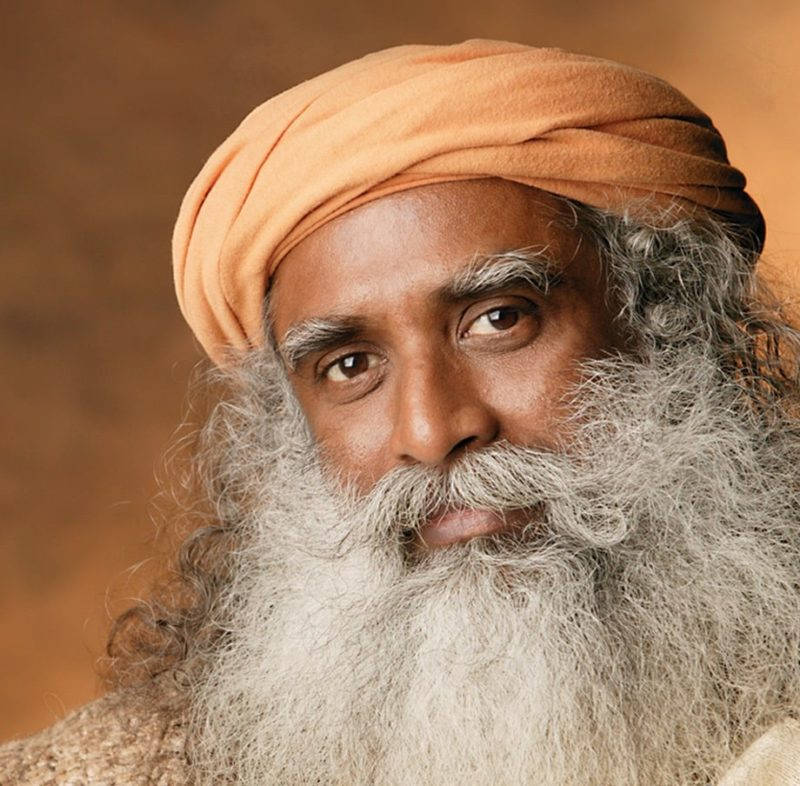
Sadhguru: The Mysore Rebel Who Became a Global Yogi
The full story of Jaggi Vasudev — poultry farmer turned mystic, founder of the Isha Foundation, author of Inner Engineering, and the man behind the Save Soil movement. A research-based, balanced account, including the controversies critics raise.
Introduction
On the evening of 23 September 1982, a twenty-five-year-old poultry farmer and small-time construction contractor rode his motorcycle up Chamundi Hill on the outskirts of Mysore, the way he had done countless times before with friends. He sat down on a favorite rock. Nothing about the moment suggested it would be remembered decades later by millions of people. And yet, in his own retelling, "what was me and what was not me" began to dissolve — the rock, the air, the hillside, all of it stopped feeling separate from him. He sat in that state for nearly four hours, tears streaming down his face, unable to say where his body ended and the world began.
That man was Jagadish Vasudev. Today he is known simply as Sadhguru — founder of the Isha Foundation, author of internationally bestselling books, a fixture at platforms from Davos to the United Nations, and one of the most recognizable yogis of the last half-century. This is his story, told as carefully as the available record allows: the businesses he ran before any of this began, the experience on the hill, the decades of teaching that followed, the institutions he built, the controversies that trail him, and the environmental campaigns that have, for better or worse, made "save the soil" a phrase recognized well beyond India.
Quick Information Table
| Field | Details |
|---|---|
| Full name | Jagadish "Jaggi" Vasudev |
| Known as | Sadhguru |
| Born | 3 September 1957, Mysore, Karnataka (then Mysore State), India |
| Parents | Dr. B. V. Vasudev (ophthalmologist, Indian Railways) and Susheela Vasudev (homemaker) |
| Education | Bachelor's degree in English literature, University of Mysore |
| Spouse | Vijaya "Vijji" Kumari (married 1984; died 1997) |
| Children | One daughter, Radhe Jaggi |
| Organization | Isha Foundation (founded 1992), near Coimbatore, Tamil Nadu |
| Major works | Inner Engineering: A Yogi's Guide to Joy; Karma: A Yogi's Guide to Crafting Your Destiny; Death: An Inside Story; Adiyogi: The Source of Yoga |
| Notable projects | Dhyanalinga, Adiyogi statue, Project GreenHands, Rally for Rivers, Cauvery Calling, Save Soil |
| Honors | Padma Vibhushan (2017), Indira Gandhi Paryavaran Puraskar |
| Website | isha.sadhguru.org |
Birth and Early Life
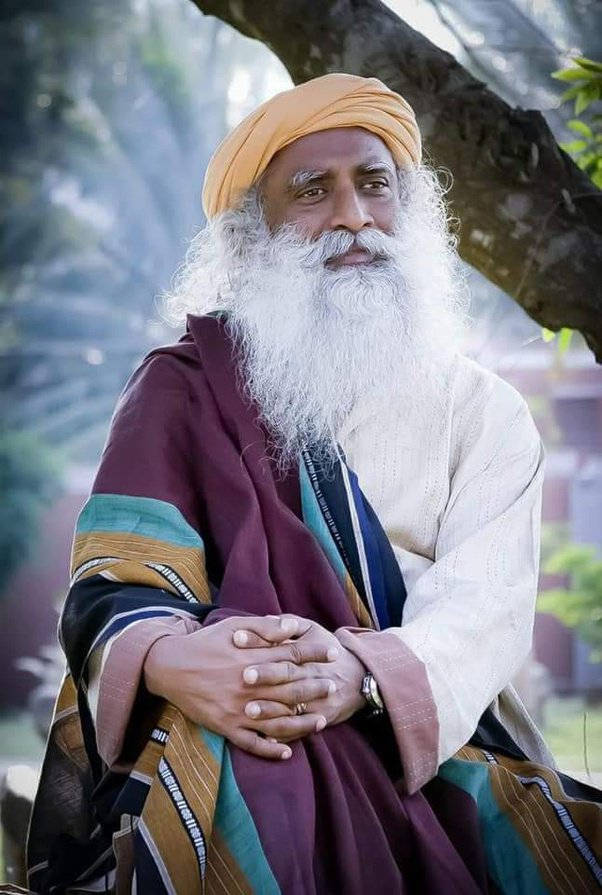
Jagadish Vasudev was born on 3 September 1957 in Mysore, into a Telugu-speaking family, the youngest of five children. His father worked as an ophthalmologist attached to the Indian Railways, a job that meant frequent transfers and, according to most accounts, a comfortable and stable household for the family. His mother ran the home. Multiple biographical sources describe him as an unusually restless, curious child — one who slipped off into the jungle near wherever the family was living and sometimes stayed there for hours or days, developing along the way a lifelong fascination with snakes that would surface repeatedly in his later talks and writing.
At around the age of twelve or thirteen, he was introduced to a yoga teacher named Malladihalli Sri Raghavendra Swamiji, from whom he learned a basic set of physical yoga postures. He has said in interviews that he practiced them daily without any particular interest in their spiritual dimension — as a purely physical discipline he happened to be good at — and that this early training gave him no premonition of what would happen on Chamundi Hill more than a decade later.
His college years, spent studying English literature at the University of Mysore, are consistently described across sources as unfocused academically and dominated instead by an enthusiasm for motorcycles. He and his friends rode extensively through the Karnataka countryside, and Chamundi Hill — a modest, well-known hill overlooking Mysore — was one of their regular haunts long before it became the site of anything remarkable.
Business Years: Before the Guru
Before he was ever a spiritual teacher, Jaggi Vasudev was a working businessman. After finishing university, he started a poultry farm, reportedly building the cages for over three thousand birds largely with his own hands. Several accounts describe him living frugally, at times on very little, to keep the business afloat in its early stages. Once the poultry farm was established, he went on to co-found a construction company called Buildaids with a friend who was a trained civil engineer; Vasudev himself had no formal training in construction but applied what he had learned building his own farm structures. Both ventures are described as reasonably successful by the time he was in his mid-twenties — a detail worth holding onto, because it complicates any simple story of a man who abandoned failure for spirituality. By most accounts, he walked away from businesses that were actually working.
The Chamundi Hill Experience
The pivotal date in Sadhguru's own account of his life is 23 September 1982. He was twenty-five. What follows is drawn primarily from his own retellings in talks and writings, since — as with any inner experience — there is no external way to verify it; it is presented here as his account, not as an independently confirmed event.
He describes sitting on a large rock on Chamundi Hill, a spot he had visited many times, when the ordinary boundary between himself and his surroundings seemed to give way. "All my life I had thought, this is me," he has said, "but now the air I was breathing, the rock on which I was sitting, the atmosphere around me — everything had become me." The state lasted, by his account, for roughly four hours, and a similar experience recurred about six days later at his home. Six weeks after the first episode, he closed his businesses and began traveling — first across Karnataka, then further afield — trying to make sense of what had happened to him.
Within about a year, he had begun teaching yoga informally, conducting his first class in Mysore in 1983 out of his own home, under what he called Sahaja Sthiti Yoga. He supported himself in this period on rental income from the poultry farm and modest donations from early students, traveling on his motorcycle to teach across Karnataka and into Hyderabad.
Founding the Isha Foundation
Nearly a decade of itinerant teaching followed before Sadhguru formally established the Isha Foundation in 1992, choosing a site near the Velliangiri foothills outside Coimbatore, Tamil Nadu, to build what became the Isha Yoga Center. The foundation describes itself as a non-profit, volunteer-run organization focused on yoga programs, education, and, increasingly over the following decades, environmental initiatives.
Two major spiritual installations anchor the Isha Yoga Center. The Dhyanalinga, consecrated in 1999 after years of construction, is described by the foundation as a meditative energy space built without any particular religious affiliation, intended to be usable by people of any or no faith. Considerably later, in 2017, Sadhguru consecrated the Adiyogi statue — a 112-foot bust depicting Shiva in his form as the "first yogi," recognized by Guinness World Records as the largest bust sculpture on Earth. The statue's height is a deliberate reference to the "112 ways" of yogic transformation that the tradition attributes to Adiyogi's teaching.

Personal Life: Marriage and Loss
Sadhguru met Vijaya Kumari — known to those close to her as Vijji — in Mysore, and the two married in 1984. She had previously been married and divorced. Their daughter, Radhe Jaggi, who later became a Bharatanatyam classical dancer, was born in 1990.
Vijji died on 23 January 1997 at the Isha Yoga Center. Sadhguru's own account, given publicly within days of her death, is that she consciously and voluntarily left her body in a state the yogic tradition calls mahasamadhi — understood within that tradition as the deliberate exit of an accomplished practitioner who has mastered the process of dying, rather than an ordinary death. She was cremated within roughly twelve hours, reportedly in the presence of around two thousand people.
Approximately eight months later, Vijji's father filed a police complaint alleging that the circumstances of her death were suspicious and that the cremation had been conducted hastily, without waiting for her family to arrive. The complaint, along with the surrounding allegations, received significant coverage in the Tamil press at the time, some of which explicitly raised the possibility of foul play. Isha Foundation has stated that a police investigation followed and that no charges were ultimately brought against Sadhguru. Independent, contemporaneous court or police documentation of the investigation's findings is not easily accessible today, and the episode remains, to this day, a point that critics of Sadhguru continue to raise, while the Isha Foundation continues to maintain its account of mahasamadhi. Given the sensitivity and the thinness of independently verifiable documentation, this article presents both positions without asserting which is correct — readers seeking more should consult primary reporting from 1997–1998 rather than later secondary retellings on either side.
Yogic and Philosophical Approach
Sadhguru describes what he teaches not as a religion or a fixed doctrine but as a "technology" — a set of practical methods for working with one's own energy, attention, and physiology, deliberately kept separate from questions of belief. He has repeatedly said that a person does not need to accept any particular philosophy or deity to practice what he teaches; what matters, in his framing, is willingness to experiment with the practice and observe the results in oneself.
His flagship program, Inner Engineering, is built around a core practice called Shambhavi Mahamudra Kriya, a combination of breath, posture, and internal focus that participants are taught over a multi-day course, traditionally in person and later also offered online. The program draws loosely on the broader Hatha and Kriya yoga traditions of South India but is presented by Isha as a standalone, modernized system rather than a direct continuation of any single classical text or lineage. This is a meaningful distinction from figures such as Swami Sivananda or T. Krishnamacharya, whose teachings are more directly traceable to specific historical lineages and named texts; Sadhguru's system, by contrast, is largely attributed to his own realization following the 1982 experience, transmitted and systematized by him personally over the following decade.
Books and Writing
Sadhguru has published more than thirty books, several of which have become significant commercial successes. Inner Engineering: A Yogi's Guide to Joy (2016) reached the New York Times bestseller list and remains his best-known work in English-language markets, laying out both his personal story and the philosophical basis of his teaching in accessible prose. Karma: A Yogi's Guide to Crafting Your Destiny reframes the classical concept of karma away from popular ideas of cosmic reward and punishment and toward a more psychological reading centered on habitual patterns of thought and action. Death: An Inside Story addresses mortality directly, drawing on yogic frameworks for approaching death consciously. Adiyogi: The Source of Yoga, co-authored with Isha writers, lays out the foundational Adiyogi narrative discussed in the Isha Foundation's broader teaching material.
Global Reach and Public Platforms
Sadhguru has addressed a wide range of major international platforms, including the United Nations' Millennium World Peace Summit, the House of Lords in the UK Parliament, the Massachusetts Institute of Technology, and repeated appearances at the World Economic Forum in Davos. Isha Foundation's own figures place the number of people who have gone through Inner Engineering and related programs in the tens of millions worldwide, though — as with most figures released directly by any organization about its own reach — these numbers come from Isha itself rather than independent audit, and should be read with that in mind.
Environmental Activism
Over the last decade and a half, environmental campaigning has become as central to Sadhguru's public identity as yoga teaching itself.
- Project GreenHands, one of the foundation's earliest environmental initiatives, focused on large-scale tree planting in Tamil Nadu to address water and soil degradation.
- Rally for Rivers, launched in 2017, was a campaign to build public and political support for river revitalization policy across India, including a river-revitalization proposal presented to the Government of India.
- Cauvery Calling, launched in 2019, focused specifically on encouraging farmers along the Cauvery river basin to plant trees — aiming, according to Isha's own stated target, at billions of trees over time — with the goal of replenishing groundwater and river flow. The campaign secured memoranda of understanding with several state governments, though independent hydrological assessments of its actual river-flow impact are limited and the subject of some scientific debate.
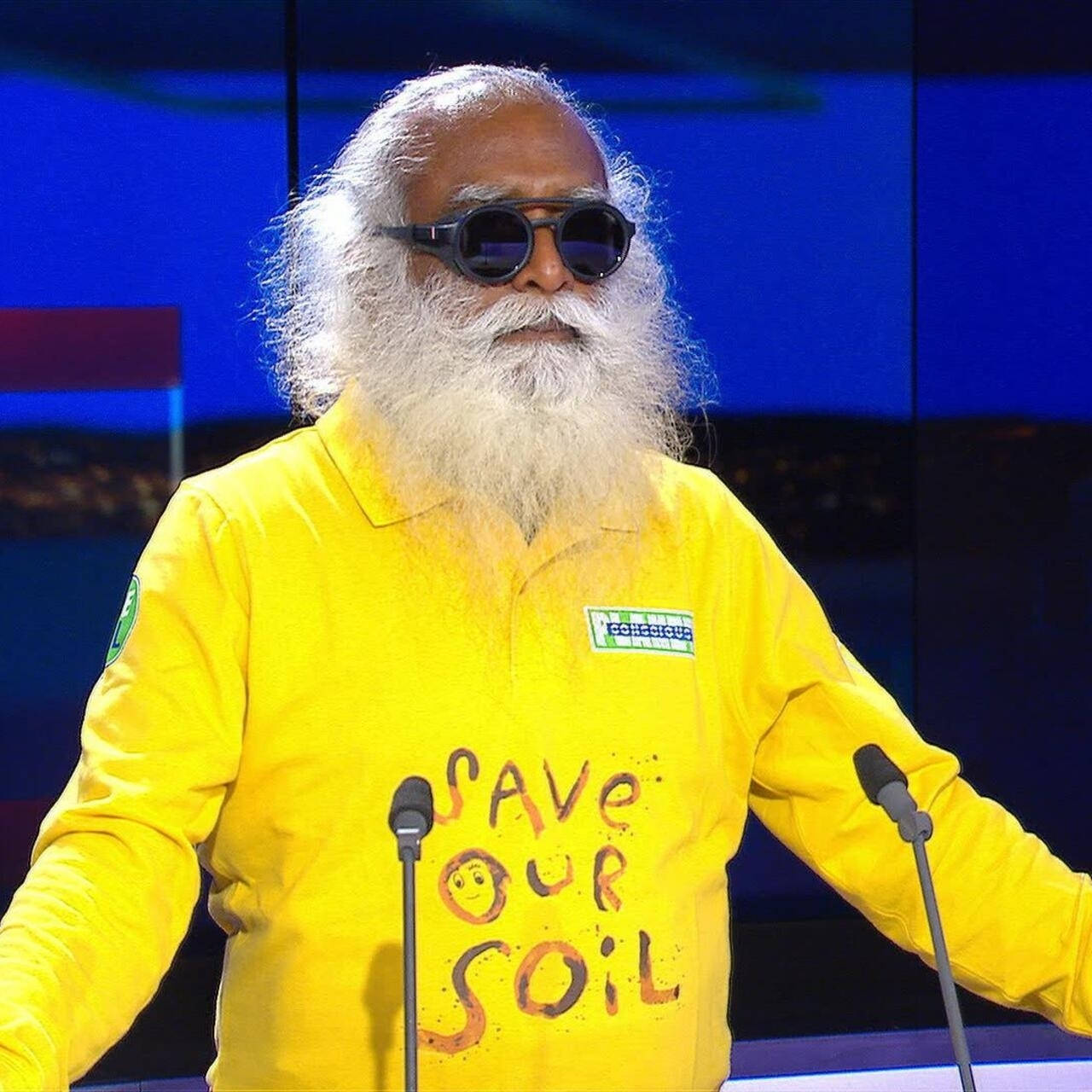
- Save Soil, launched in 2022, was by far the most visible of these campaigns. Sadhguru personally rode a motorcycle roughly 30,000 kilometers across 27 countries over about 100 days, from London to India, to draw attention to soil degradation. The campaign culminated in an address to representatives of 195 countries at a United Nations Convention to Combat Desertification meeting in May 2022, and included a publicized conversation with India's Prime Minister on soil health that June.

These campaigns have drawn both praise and skepticism. Supporters point to genuine, measurable tree-planting numbers and to the fact that soil degradation is a real and under-discussed global issue, one that mainstream bodies like the UN's Food and Agriculture Organization also flag as a serious long-term risk. Critics — including some agricultural scientists — have questioned whether tree-planting alone, without more rigorous farming-policy reform, meaningfully addresses the underlying causes of soil loss, and whether the scale of impact claimed by Isha's own publicity matches independently measured outcomes. Both viewpoints are presented here without this article taking a side on the underlying scientific dispute, which remains open.
Controversies
In the interest of a balanced record, several other controversies associated with Sadhguru and the Isha Foundation are worth noting plainly, without editorializing:
- Pseudoscience criticism. Sadhguru has been criticized by some Indian scientists and science journalists — notably fact-checking outlets such as Alt News — for making claims that go beyond current scientific consensus, including statements about the health effects of certain traditional substances and practices. Where such claims touch on health or medicine specifically, this article does not repeat or endorse them.
- Land-use disputes. The Isha Yoga Center has faced allegations over the years, including from some Tamil Nadu environmental and government bodies, concerning construction and land use near the Velliangiri forest reserve. Isha Foundation has disputed these characterizations and pointed to legal clearances it holds.
- Political associations. Sadhguru has met with senior Indian political leaders, including the Prime Minister, on matters such as soil policy, and has at times been associated in media commentary with themes connected to Hindu nationalism, though he has also stated repeatedly that his teaching is deliberately kept independent of any single religion or political ideology. Readers interested in this dimension should consult contemporary, balanced reporting rather than either Isha's own materials or hostile commentary alone.
None of the above is presented as settled fact where it remains disputed; it is included because a biography that omitted it would not meet the standard of balance this piece aims for.
Legacy
Whatever view one takes of the disputes above, Sadhguru's institutional footprint is not in question. The Isha Foundation operates centers in multiple countries, the Adiyogi statue has become one of the most visually recognizable modern monuments associated with yoga anywhere in the world, and his books continue to sell in large numbers years after publication. He has, more than perhaps any other living Indian spiritual teacher, succeeded in placing yoga-adjacent environmental language — "save the soil," soil health as a matter of civilizational survival — into mainstream international policy conversations, a genuinely unusual achievement for a figure who began as a small-town poultry farmer with no institutional backing.
Lessons for Readers
- He did not abandon failing ventures for spirituality — by his own account and others', his businesses were working when he left them, which he has used repeatedly to argue that his shift was not escapism but a response to something he considered undeniable.
- His teaching method has consistently emphasized direct practice over belief — asking people to try a technique and observe results, rather than persuading them of a philosophy first.
- His later environmental work suggests a consistent pattern of translating an inward practice into large-scale, outward-facing public action, rather than treating spirituality and public engagement as separate domains.
Conclusion
From a rock on Chamundi Hill to a podium at the United Nations, Sadhguru's public life spans a distance that is easy to state and hard to fully account for. The available record — his own testimony, journalistic coverage, institutional documentation, and the criticism leveled by others — does not resolve every question about him, particularly around the more painful and contested chapters of his story. What it does show clearly is a figure who has built, over more than four decades, one of the largest and most globally visible yoga organizations of the modern era, and who continues to use that platform to push environmental and spiritual themes into rooms most yoga teachers never reach.
Frequently Asked Questions
Who is Sadhguru?
Sadhguru, born Jagadish Vasudev, is an Indian yogi, author, and founder of the Isha Foundation, known for his Inner Engineering program and environmental campaigns such as Save Soil.
When and where was Sadhguru born?
He was born on 3 September 1957 in Mysore, Karnataka, India.
What did Sadhguru do before becoming a spiritual teacher?
He ran a poultry farm and later co-founded a construction company called Buildaids, both of which were reportedly doing well when he left them in 1982.
What happened to Sadhguru on Chamundi Hill?
On 23 September 1982, he describes having had a spontaneous spiritual experience in which the boundary between himself and his surroundings seemed to dissolve, an event he cites as the turning point of his life.
When was the Isha Foundation founded?
In 1992, near the Velliangiri foothills outside Coimbatore, Tamil Nadu.
What is Inner Engineering?
Isha Foundation's flagship program, centered on a breath-and-meditation practice called Shambhavi Mahamudra Kriya, taught over a multi-day course.
What are Sadhguru's most well-known books?
Inner Engineering: A Yogi's Guide to Joy, Karma: A Yogi's Guide to Crafting Your Destiny, and Death: An Inside Story are among his best-known titles.
What is the Adiyogi statue?
A 112-foot bust of Shiva as the "first yogi," consecrated by Sadhguru in 2017 at the Isha Yoga Center, recognized by Guinness World Records as the largest bust sculpture in the world.
Was Sadhguru married?
Yes, to Vijaya "Vijji" Kumari, from 1984 until her death in 1997. They have one daughter, Radhe Jaggi.
How did Sadhguru's wife die?
Sadhguru describes her death as a voluntary mahasamadhi. A police complaint filed by her father months later alleged suspicious circumstances; Isha Foundation states no charges resulted from the subsequent investigation. The episode remains disputed by critics.
What is the Save Soil movement?
A 2022 global campaign led by Sadhguru, including a roughly 30,000-kilometer motorcycle journey across 27 countries, aimed at raising awareness of soil degradation and influencing agricultural policy.
What awards has Sadhguru received?
He received India's Padma Vibhushan, the country's second-highest civilian honor, in 2017, along with the Indira Gandhi Paryavaran Puraskar for environmental work.
Has Sadhguru faced any criticism?
Yes — including from science journalists over certain health-related claims, from some environmental and government bodies over land use near the Isha Yoga Center, and from critics regarding the circumstances of his wife's death. This article presents these disputes without taking a side where the underlying facts remain contested.
Is Sadhguru's teaching tied to a specific religion?
He describes it as a practice-based methodology rather than a religious doctrine, and states that no particular belief system is required to practice it, though the imagery and vocabulary he uses draw heavily on the Hindu and yogic tradition, particularly Shiva as Adiyogi.
Where is the Isha Yoga Center located?
Near the Velliangiri foothills outside Coimbatore, Tamil Nadu, India.
References
Books
- Sadhguru, Inner Engineering: A Yogi's Guide to Joy, Harmony Books, 2016
- Sadhguru, Karma: A Yogi's Guide to Crafting Your Destiny, Harmony Books, 2021
- Sadhguru, Death: An Inside Story, Penguin Random House India, 2020
Websites
- Wikipedia — "Sadhguru" — en.wikipedia.org
- Isha Foundation — official website — isha.sadhguru.org
- Isha Foundation — "Vijji (Vijaykumari): A Story of Love and Devotion" — isha.sadhguru.org
- Alt News — reporting on Sadhguru's health-related claims — altnews.in
Note on sourcing: Several claims in this article — particularly around the 1997 death of Vijji Kumari and the land-use disputes — are contested between Isha Foundation's own published account and independent journalistic and critical sources. Where this is the case, the article states both positions rather than adopting either as settled fact.
Want to go deeper into authentic Yoga practice with Iti Iti Yogashram?
Get in Touch