Paścimottānāsana (Seated Forward Bend): Classical Sources, Anatomy, Alignment & Evidence-Based Guide
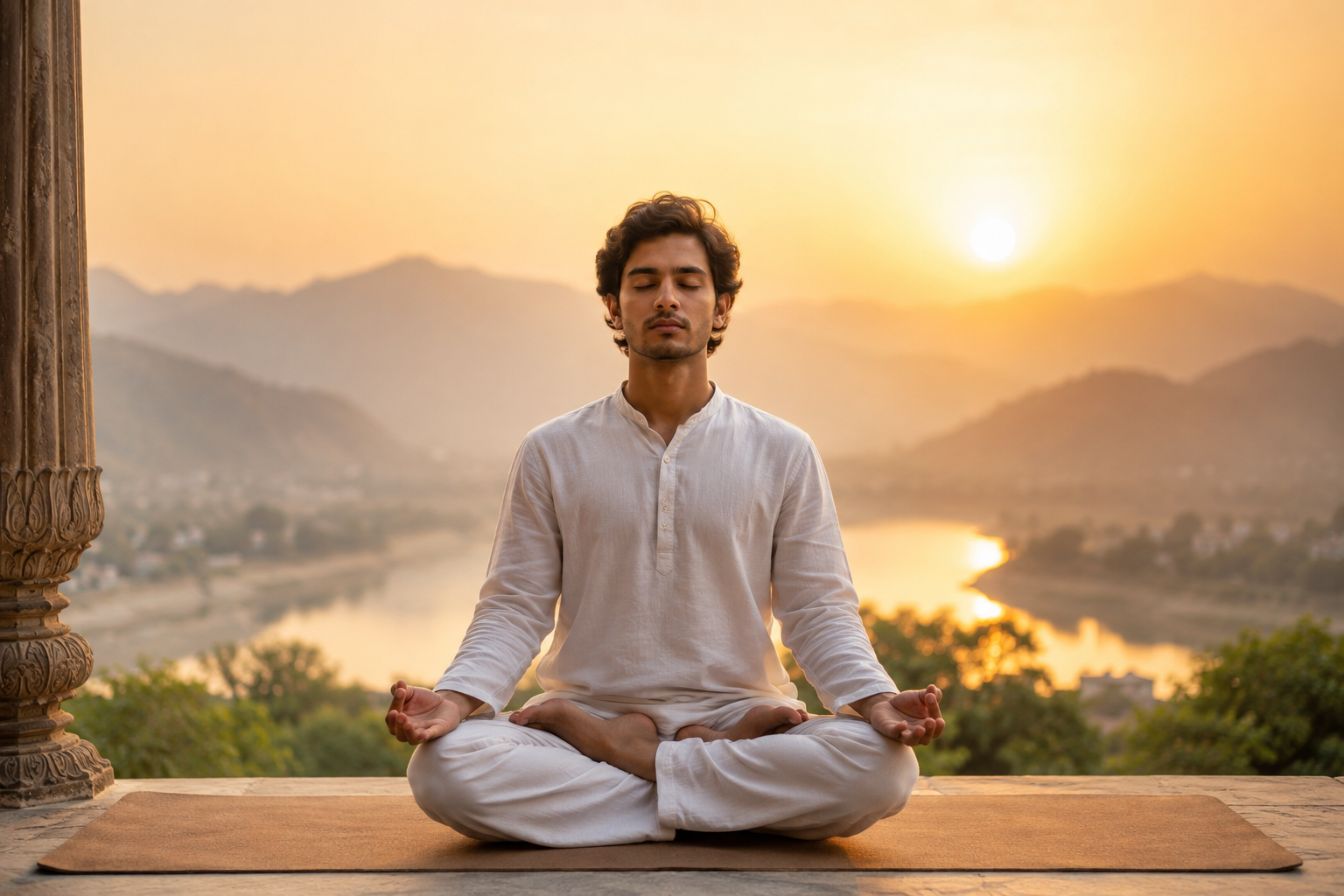
Paścimottānāsana (Seated Forward Bend): The Complete Reference Guide
Editorial note, stated once: throughout this article, traditional yogic and Āyurvedic claims (chakra, prāṇa, dosha associations) are presented as traditional belief, not scientific fact, unless a specific evidence source is cited alongside them.
Name & Meaning
- Sanskrit: पश्चिमोत्तानासन (Paścimottānāsana) / पश्चिमतान (Paścimatāna)
- IAST Transliteration: Paścimottānāsana / Paschimottanasana
- English: Seated Forward Bend / Intense West-Stretch Pose
- Etymology: Paścima (west / back of the entire body, traditionally oriented facing east toward the rising sun) + Uttāna (intense stretch / extension) + Āsana (posture / seat). "The posture that intensely stretches the entire posterior line (the "west side") of the body from the heels up to the crown of the head."
Introduction
- Paścimottānāsana is universally recognized across classical scriptures as the undisputed "queen of seated forward folds" (āsanānām atirājñīṁ).
- Characterized by sitting in Daṇḍāsana with legs extended straight forward, hinging deeply from the hip acetabular joints rather than rounding the waist, catching the big toes, sides of the feet, or wrists behind the soles, and laying the abdomen, chest, and face flat along the thighs and shins.
- Holds an eminent, unbroken classical textual lineage: explicitly praised in the 15th-century Haṭhayogapradīpikā (Chapter 1, Verses 28–29), the 17th-century Gheraṇḍa Saṃhitā (Chapter 2, Verse 26), and the Śiva Saṃhitā (Chapter 3, Verses 83–84).
- Functions as a master clinical diagnostic posture for evaluating superficial back line myofascial extensibility, pelvic anterior tilt mobility, hamstring length, and parasympathetic vagal reactivity.
Benefits
- Superficial Back Line & Hamstring Lengthening: Maximally extends the entire posterior myofascial chain—gastrocnemius, soleus, hamstrings (biceps femoris, semitendinosus, semimembranosus), gluteus maximus, thoracolumbar fascia, and erector spinae.
- Autonomic Nervous System Regulation: Sustained forward folding with steady diaphragmatic respiration stimulates vagal mechanoreceptors, inducing a shift toward parasympathetic tone, reducing heart rate, and mitigating systemic stress.
- Abdominal Visceral Massaging: Pressing the anterior abdominal wall firmly against the thighs generates gentle intra-abdominal pressure that compresses internal organs, aiding gastrointestinal motility and colonic transit upon release.
- Spinal Decompression: Axial extension maintained prior to folding creates space between lumbar intervertebral discs, relieving tension in hypertonic paraspinal muscles.
- Traditional/Spiritual: Classically proclaimed in the Haṭhayogapradīpikā to direct Prāṇa into the central channel (Paśchimavāhi / Suṣumnā Nāḍī), kindle Jaṭharāgni (digestive fire), reduce abdominal fat, and free the practitioner from disease—traditional belief, not a scientific claim.
How to Practice Paścimottānāsana: Step-by-Step
| Step | Action | Breath | Teacher Cue |
|---|---|---|---|
| 1 | Sit upright in Daṇḍāsana (Staff Pose) on a firm mat with legs fully extended together, feet dorsiflexed, heels pressing forward, and hands flat beside hips. | Natural breath | "Root down through both sit-bones and reach the crown of your head to the ceiling." |
| 2 | Inhale, sweep both arms overhead, extending through the side waists to create vertical axial extension in the spine. | Inhale deeply overhead | "Inhale, lengthen your ribcage away from your pelvis." |
| 3 | Exhale, hinge forward from the hip joint creases (tilting pelvis anteriorly), keeping the spine long. Reach forward to catch big toes (toe-lock), outer edges of feet, or loop a strap around feet. | Exhale to hinge forward | "Fold from your hip sockets like a closing pocket knife, keeping your heart reaching forward." |
| 4 | Inhale, lift chest slightly to flatten upper back and broaden collarbones (halfway lift / concave spine). | Inhale to lengthen spine | "Lift your sternum toward your big toes to extend your front body." |
| 5 | Exhale, bend elbows outward, draw abdomen to thighs, chest to knees, and finally forehead or chin to shins. Hold for 5 to 10 deep, smooth breaths. | Slow, rhythmic diaphragmatic breath | "With every inhale, lengthen your spine forward; with every exhale, soften your torso down." |
| 6 | To exit, inhale, reach arms forward, extend spine long, lift torso all the way back to vertical with straight arms, and lower hands back to Daṇḍāsana. | Inhale to rise up | "Inhale, rise up with a long, flat back, using your core to return to upright." |
Common Mistakes & Corrections
- Rounding the lumbar spine (slouching backward in posterior pelvic tilt): Flexing from the mid-back instead of the hips compresses anterior intervertebral lumbar discs → Correction: Elevate sit-bones on a folded yoga blanket to tip pelvis forward, and hold a yoga strap around feet to keep spine extended.
- Yanking on feet with arm strength and scrunching shoulders: Pulling aggressively strains upper trapezius and necks without deepening hip flexion → Correction: Broaden collarbones, bend elbows outward, and let the fold come from abdominal hinge.
- Jamming kneecaps down / hyperextending knees: Forcing joints downward causes strain on knee popliteal ligaments → Correction: Maintain a subtle micro-bend in knees and engage quadriceps actively to pull kneecaps toward hips.
- Splaying legs outward or rolling feet open: Allowing feet to flop outward removes stretch from inner hamstrings → Correction: Flex feet firmly, pressing big toe mounds forward while keeping inner knees touching.
Contraindications & Precautions
- Acute Lumbar Disc Herniation, Bulging Disc, or Sciatica: Deep lumbar forward flexion under passive pull can aggravate posterior disc protrusion and pinch nerve roots; practice with straight spine, bent knees, or under physical therapy guidance.
- Acute Hamstring Tendinopathy or Ischial Avulsion Injury: Full lengthening of hamstrings at proximal origin can strain healing tissue; keep knees bent.
- Late Pregnancy (Second & Third Trimesters): Full abdominal compression against thighs is contraindicated; practice wide-legged seated forward fold (Upaviṣṭa Koṇāsana) instead.
- Severe Osteoporosis of the Spine: End-range spinal flexion increases vertebral compression fracture risk; focus on upright axial extension (Daṇḍāsana).
Sequencing: Preparatory, Follow-up & Variations
- Preparatory Poses: Uttānāsana (Standing Forward Bend), Daṇḍāsana (Staff Pose), Janu Śīrṣāsana (Head-to-Knee Pose), Adho Mukha Śvānāsana (Downward Dog).
- Placement in Sequence: Mid-to-late seated cooling sequence, serving as the central peak forward fold before transitioning to counter-poses and restorative rest.
- Follow-up Poses: Pūrvottānāsana (Upward Plank Pose—mandatory classical counter-pose), Setu Bandhāsana (Bridge Pose), Supta Matsyendrāsana, Śavāsana.
- Variations:
- Strap-Assisted Paścimottānāsana: Using a belt around foot soles with straight arms and flat back.
- Urdhva Mukha Paścimottānāsana: Inverted/balancing forward fold balancing on sit-bones holding feet high.
- Supported Restorative Paścimottānāsana: Resting torso and forehead over a bolster placed lengthwise on legs.
In more detail: Paścimottānāsana serves as the primary gauge of posterior chain length in yoga. Following dynamic standing poses and backbends, it cools internal heat, quietens sympathetic arousal, and restores physiological length to the paraspinal and hamstring fascial networks.
Modifications
- Elevated Sit-Bones (For Tight Hamstrings / Posterior Pelvic Tilt): Sit on the edge of 1–2 folded yoga blankets to lift pelvis, allowing gravity to tilt sacrum forward.
- Yoga Strap Around Feet (Maintains Flat Spine): Loop a yoga strap around foot soles; hold strap with extended straight arms while keeping chest lifted and collarbones wide.
- Micro-Bent Knees (Protects Low Back & Popliteal Space): Place a rolled towel or thin blanket under the backs of knees to release hamstring tension at knees.
- Bolster-Supported Restorative Fold: Lay a bolster or stacked pillows on top of thighs and rest chest and head flat on bolster for prolonged, effortless relaxation.
Historical Background & Classical References
- Classical Scripture Source 1: Haṭhayogapradīpikā (Chapter 1, Verses 28–29):
प्रसार्य पादौ भुवि दण्डरूपौ दोर्भ्यां पदाग्रद्वितयं गृहीत्वा।
जानूर्वोरुपरि ललाटदेशो वसेदिदं पश्चिमतानमाहुः॥ २८ ॥
इति पश्चिमतानमासनानाम् अतिराज्ञीं पवनं पश्चिमवाहिं करोति।
उदयमपि करोति जाठराग्निं कुरुते राममरोगां च पुंसाम्॥ २९ ॥
Prasārya pādau bhuvi daṇḍarūpau dorbhyāṁ padāgradvitayaṁ gṛhītvā |
Jānūrvorupari lalāṭadeśo vasedidaṁ paścimatānamāhuḥ || 1.28 ||
Iti paścimatānamāsanānām atirājñīṁ pavanaṁ paścimavāhiṁ karoti |
Udayamapi karoti jāṭharāgniṁ kurute rāmamarogāṁ ca puṁsām || 1.29 ||
"Extending both legs straight on the ground like a stick, grasping the tips of the feet with both hands, and resting the forehead upon the knees—this is called Paścimatāna. This Paścimatāna is the queen among Āsanas; it directs the vital air into the central channel (Suṣumnā), kindles the digestive fire, slims the abdomen, and grants freedom from disease." - Classical Scripture Source 2: Gheraṇḍa Saṃhitā (Chapter 2, Verse 26):
प्रसार्य पादौ भुवि दण्डरूपौ पाणिभ्यां पादाग्रयुगं च धृत्वा।
जानूपरि न्यस्तशिरोयुग्मं साधयेत्पश्चिमत्तानमासनम्॥ २६ ॥
Prasārya pādau bhuvi daṇḍarūpau pāṇibhyāṁ pādāgrayugaṁ ca dhṛtvā |
Jānūpari nyastaśirojugmaṁ sādhayetpaścimattānamāsanam || 2.26 ||
"Extending the legs straight like a rod on the earth, holding the toes with both hands, and resting the head upon the knees—this completes Paścimottānāsana."
Alignment Principles (Iyengar Method)
- Anterior Pelvic Tilt Foundation: Forward movement originates entirely from anterior rotation of the pelvis over the femoral heads, not bending the lumbar spine.
- Quadriceps Co-Contraction: Active engagement of quadriceps femoris reciprocal-inhibits hamstrings, allowing posterior fascia to yield safely.
- Foot Dorsiflexion (Hastha-Pada Connection): Feet remain flexed at 90 degrees; heels press forward while toes pull back toward shins.
- Axial Length Before Depth: Sternum and collarbones reach forward toward big toes before lower body folds down.
Anatomy & Biomechanics
- Primary Stretched Muscles: Biceps femoris, semitendinosus, semimembranosus (hamstrings), gastrocnemius, soleus, gluteus maximus, thoracolumbar fascia, erector spinae.
- Primary Active/Strengthening Muscles: Quadriceps femoris (rectus femoris, vastus lateralis/medialis/intermedius), iliopsoas, rectus abdominis, tibialis anterior.
- Joint Mechanics: Deep hip flexion (femoral-acetabular movement); knee full extension; ankle dorsiflexion; neutral to softly flexed spinal column.
- Pelvic-Spinal Biomechanics & Reciprocal Inhibition: Forcing forward flexion with tight hamstrings forces the lumbar spine to hyper-flex to compensate for lack of pelvic tilt. Engaging the quadriceps sends an inhibitory neurological signal via the muscle spindle apparatus to relax the antagonist hamstrings, protecting the lumbar spine.
Nervous System & Breathing Effects
- Vagal Parasympathetic Surge: Compression of the anterior body paired with long, quiet exhalations stimulates the parasympathetic nervous system, lowering blood pressure and quieting mental chatter.
- Posterior Intercostal Respiration: Abdominal contact against thighs restricts anterior diaphragmatic descent, directing inhalation into the posterior thoracic cage and expanding back ribs.
Yogic & Āyurvedic Perspective
- Dosha Impact: Exceptionally effective at pacifying aggravated Pitta (cools internal heat, anger, and inflammation) and grounding scattered Vāta when held with steady breath—traditional belief.
- Prāṇa Dynamics: Directs Apāna Vāyu smoothly downward while drawing Prāṇa Vāyu into the central Suṣumnā Nāḍī, igniting Samāna Vāyu at the navel center.
Therapeutic Applications
| Condition | Mechanism | Research / Precaution |
|---|---|---|
| High Stress, Anxiety & Insomnia | Baroreceptor and vagal activation reduce sympathetic outflow and systemic cortisol levels | Supported by autonomic relaxation studies. Precaution: Use bolster support for long holds. |
| Tight Hamstrings & Lower Back Muscle Spasm | Systematic static stretching lengthens posterior myofascial chain and relaxes paraspinal muscles | Supported by physical therapy flexibility research. Precaution: Elevate hips on blanket if pelvis is rigid. |
Yoga is never a replacement for medical treatment; serious or persistent conditions require a qualified healthcare professional.
Teaching Cues & Hands-On Adjustments
- Verbal Cues: "Inhale to grow tall through your spine; exhale to hinge from your hips like a opening book." / "Press your heels forward and pull your toes back to light up your legs." / "Reach your heart toward your toes, not your forehead to your knees."
- Hands-on Adjustment (Safe execution with consent):
- Stand behind student; place hands gently flat on their sacrum, applying soft forward and downward pressure to encourage anterior pelvic tilt.
- Place hands on student's upper mid-back, guiding them to reach their chest forward rather than rounding their shoulders.
Myth vs. Fact
| Myth | Fact |
|---|---|
| Your head must touch your knees for Paścimottānāsana to be beneficial. | Forcing forehead to knees with a rounded back strains lumbar discs; hinging from hips with a flat back yields maximum benefit regardless of depth. |
| You should pull as hard as possible with your arm strength to get deeper. | Yanking creates muscular defense tightening; depth comes from breathing, quadriceps engagement, and deep pelvic hinging. |
| Paścimottānāsana is a modern 20th-century posture. | It is one of the most prominent classical postures documented in 15th-century Haṭhayogapradīpikā (1.28–29) and 17th-century Gheraṇḍa Saṃhitā (2.26). |
Conclusion
Paścimottānāsana (Seated Forward Bend) stands as the supreme classical posture for stretching the posterior body and quieting the nervous system. By grounding the sit-bones, engaging the quadriceps, hinging from the hips, and softening into the breath, practitioners cool mental agitation, lengthen the superficial back line, and draw energy into the central channel of stillness.
Quick Facts
| Category | Seated forward bend / Classical primary posture |
| Difficulty Level | Beginner to Advanced |
| Primary Muscles Stretched | Hamstrings, Gastrocnemius, Gluteus Maximus, Erector Spinae |
| Primary Muscles Active | Quadriceps Femoris, Iliopsoas, Rectus Abdominis |
| Classical Source? | Yes (Haṭhayogapradīpikā 1.28–29, Gheraṇḍa Saṃhitā 2.26) |
| Traditional Chakra (Belief) | Manipūra (Solar Plexus) & Svādhiṣṭhāna (Sacral) |
| Dosha Impact (Belief) | Strongly pacifies Pitta & Vāta |
Frequently Asked Questions
What does Paścimottānāsana mean in Sanskrit?
Paścima (west/back of body) + Uttāna (intense stretch) + Āsana (pose) = Intense West-Stretch Pose or Seated Forward Bend.
Is Paścimottānāsana described in ancient scriptures?
Yes! It is celebrated as the "queen of postures" in the 15th-century Haṭhayogapradīpikā (1.28–29) and 17th-century Gheraṇḍa Saṃhitā (2.26).
Why do my hamstrings feel so tight in Seated Forward Bend?
The hamstrings cross both hip and knee joints. If tight, sit on a folded blanket to tilt your pelvis forward, or loop a yoga strap around your feet to keep your back long.
Should my back be flat or rounded in Paschimottanasana?
The priority is hinging from the hip sockets with a long, flat front spine. Rounding the lower back compresses lumbar discs and reduces pelvic stretching.
How long should I hold Seated Forward Bend?
Hold for 5 to 10 deep breaths (about 30 to 90 seconds) in standard practice, or up to 3 to 5 minutes with bolster support in restorative practice.
References
1. Classical Yoga Texts: Haṭhayogapradīpikā, Chapter 1, Verses 28–29 (15th century). Gheraṇḍa Saṃhitā, Chapter 2, Verse 26 (17th century). Śiva Saṃhitā, Chapter 3, Verses 83–84.
2. Modern Yoga Institutions: Iyengar, B.K.S. (1966). Light on Yoga. Schocken Books, pp. 166–170. Bihar School of Yoga (Asana Pranayama Mudra Bandha by Swami Satyananda Saraswati). Sivananda Yoga manuals.
3. Peer-Reviewed Scientific Research:
- Sherman, K. J., et al. (2011). A randomized trial comparing yoga, stretching, and a self-care book for chronic low back pain. Archives of Internal Medicine, 171(22), 2019-2026.
- Ni, M., et al. (2014). Comparative muscle activation patterns during yoga postures in elderly adults. BMC Complementary and Alternative Medicine, 14, 401.
This article is for educational purposes and does not replace individualized medical or physical therapy advice. Consult a qualified healthcare provider before beginning any new practice, especially with a pre-existing health condition.