Paramahansa Yogananda Biography: Life, Teachings, Autobiography of a Yogi, and Kriya Yoga Legacy
Paramahansa Yogananda Biography: Life, Teachings, Autobiography of a Yogi, and Kriya Yoga Legacy
Explore the extraordinary life, spiritual awakening, introduction of Kriya Yoga to the West, and immortal legacy of Paramahansa Yogananda — author of the spiritual classic Autobiography of a Yogi.
Introduction
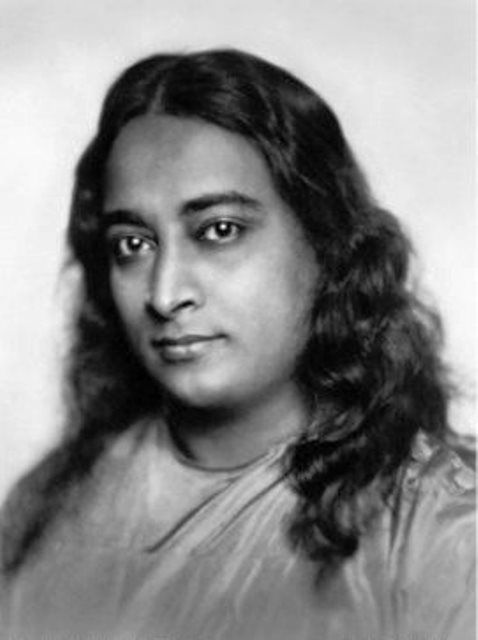
In the autumn of 1920, a young Indian monk walked onto a lecture stage in Boston, Massachusetts, carrying a message that would fundamentally bridge the spiritual gap between the East and the West. Dressed in traditional orange monastic robes, with deep, luminous eyes and an arresting aura of divine calm, he spoke on "The Science of Religion." He was neither a wandering ascetic seeking alms nor a dogmatic preacher demanding blind faith. Instead, he presented yoga as an exact, empirical science of soul-awakening, accessible to every human being regardless of nationality or creed.
That monk was Paramahansa Yogananda.
Long before mindfulness, meditation, and yoga became global lifestyle phenomena, Yogananda planted the seeds of Eastern mysticism in Western soil. As the founder of Self-Realization Fellowship (SRF) and Yogoda Satsanga Society of India (YSS), he dedicated his life to teaching Kriya Yoga — a sacred technique of spiritual evolution. Through his monumental 1946 literary masterpiece, Autobiography of a Yogi — a book that famously influenced figures from Steve Jobs to George Harrison — Yogananda opened a mystical window into a world where saints manifest miracles, masters conquer death, and the human soul realizes its oneness with the Infinite.
This is the comprehensive story of Paramahansa Yogananda — tracing his journey from a spiritually precocious boy in Gorakhpur, India, to the global apostle of Kriya Yoga.
Quick Information Table
| Field | Details |
|---|---|
| Full Name | Mukunda Lal Ghosh (later Paramahansa Yogananda) |
| Known As | Father of Yoga in the West, Apostle of Kriya Yoga, Author of Autobiography of a Yogi |
| Birth (Date & Place) | January 5, 1893, Gorakhpur, Uttar Pradesh, India |
| Death (Date & Place) | March 7, 1952 (aged 59), Los Angeles, California, USA |
| Parents | Bhagabati Charan Ghosh and Gyana Prabha Ghosh (railway executive and homemaker) |
| Guru | Swami Yukteswar Giri |
| Major Institutions Founded | Yogoda Satsanga Society of India (1917), Self-Realization Fellowship, USA (1920) |
| Spiritual Lineage | Mahavatar Babaji, Lahiri Mahasaya, Swami Yukteswar Giri, Paramahansa Yogananda |
| Nationality | Indian / American resident |
| Profession / Role | Yogi, Monk, Author, Lecturer, Spiritual Teacher |
| Major Achievements | Introducing Kriya Yoga to the West, authoring Autobiography of a Yogi (1946) |
| Famous Books | Autobiography of a Yogi, Man's Eternal Quest, The Second Coming of Christ |
| Official Website / Repository | srf-yogananda.org / yssofindia.org |
Early Life: The Spiritual Awakening of Mukunda Lal Ghosh
Born on January 5, 1893, in Gorakhpur, Uttar Pradesh, into a prosperous Bengali family, Mukunda Lal Ghosh (his pre-monastic name) displayed deep spiritual inclinations from his earliest childhood. His father, Bhagabati Charan Ghosh, was a senior executive for the Bengal-Nagpur Railway, a man of rational intellect, absolute integrity, and profound yogic understanding. His mother, Gyana Prabha Devi, was a deeply pious woman whose blessing shaped Mukunda’s destiny.
From the time he was a small boy, Mukunda felt an overwhelming restlessness for the Divine. While other children played, he spent hours meditating, seeking visions of God and divine mother Kali. He frequently ran away from home toward the Himalayas, driven by an irresistible inner calling to find enlightened saints.
His childhood was rich with mystical encounters. He possessed an uncanny intuition, experienced deep states of divine ecstasy, and met several eccentric and highly evolved spiritual figures across northern India, recognizing that his spiritual path was already predestined.

The Master: Meeting Swami Yukteswar Giri
For years, Mukunda searched for his destined guru. The turning point arrived in 1910 when, at the age of seventeen, he met Swami Yukteswar Giri in Serampore, West Bengal.
Their first meeting was electric and deeply karmic. Swami Yukteswar immediately recognized Mukunda as his long-awaited disciple, while Mukunda recognized in the austere, penetrating gaze of Yukteswar his eternal spiritual guide. For the next ten years, Mukunda lived under Swami Yukteswar’s rigorous, disciplined training at his hermitage in Serampore and Puri.
Yukteswar’s training was a masterclass in balance: he combined strict mental discipline, deep scriptural study (comparing the teachings of Jesus Christ with Hindu Upanishads), and scientific inquiry with uncompromising moral rectitude. Under Yukteswar's tutelage, Mukunda completed his graduation from the Scottish Church College in Calcutta in 1915 and formally took monastic vows (Sannyasa), entering the ancient monastic order and receiving the name Swami Yogananda (signifying divine bliss through yoga).
Founding Yogoda Satsanga and the Vision of Education
In 1917, Yogananda took his first official step toward public ministry by founding a small school for boys in Dihika, West Bengal, which soon relocated to Ranchi. This institution, named Yogoda Satsanga Society of India (YSS), integrated modern academic education with physical culture, moral training, and yoga meditation.
Yogananda envisioned an education system that nurtured body, mind, and spirit simultaneously — a pioneering concept in colonial India that aimed to instill self-reliance, character, and spiritual awakening in young minds.
Journey to America and the Birth of Self-Realization Fellowship
In 1920, an inner divine directive prompted Yogananda to travel to the United States as India's delegate to an International Congress of Religious Liberals convening in Boston. With financial support from his father and immense faith, he boarded a ship bound for America.
Arriving in Boston with virtually no money or institutional backing, Yogananda founded the Self-Realization Fellowship (SRF) in Los Angeles in 1920 to disseminate the universal teachings of Kriya Yoga across the Western world.
For the next three decades, Yogananda traveled relentlessly across the United States, delivering thousands of lectures to packed auditoriums in major cities like New York, Boston, Chicago, and Los Angeles. Prominent Americans, artists, scientists, and intellectuals — including renowned soprano Amelita Galli-Curci, inventor Luther Burbank, and psychologist Dr. W.Y. Evans-Wentz — became his devoted students. He established permanent temples, meditation centers, and retreats, making Los Angeles the global headquarters of his spiritual work.
The Masterpiece: Autobiography of a Yogi (1946)
In 1946, Yogananda published a book that would become an immortal spiritual classic read by tens of millions of people worldwide across generations: Autobiography of a Yogi.
Written with literary grace, profound humor, and staggering spiritual depth, the book chronicled Yogananda’s extraordinary life journey, his encounters with legendary Indian saints (such as the scent-gifting saint Lahiri Mahasaya, the tiger-taming master Trailanga Swami, and the immortal Himalayan sage Mahavatar Babaji), and the scientific principles underlying Kriya Yoga.
Uniquely, the book demystified miracles by explaining them not as supernatural magic, but as advanced applications of cosmic laws and spiritual science. It remains one of the best-selling spiritual memoirs in history.
Core Teachings: Kriya Yoga and the Unity of Religions
Paramahansa Yogananda’s teachings rest upon several timeless pillars:
- Kriya Yoga: An advanced psychophysiological meditation technique of pranayama and mental concentration that accelerates spiritual evolution by controlling life force (prana) in the spine.
- The Harmony of All Religions: Yogananda emphasized that the fundamental truths of Jesus Christ and Bhagavan Krishna are identical — pointing toward the direct realization of God within.
- Balanced Living: He rejected dry asceticism, teaching that material efficiency and spiritual devotion must go hand-in-hand. Success, health, and mental peace are the birthrights of every human being.
Legends and Miracles — Handled with Care
In the hagiographical traditions of Self-Realization Fellowship and popular spiritual lore, Paramahansa Yogananda’s life is accompanied by extraordinary accounts. Stories of materializing objects, projecting his consciousness to be in multiple places at once, curing chronic illnesses through touch, and commanding the elements are recorded by numerous eyewitness disciples in his autobiography. Furthermore, SRF records state that following his passing in March 1952, his physical body remained remarkably free of normal signs of decay for weeks — an event certified by the mortuary director at Forest Lawn Memorial-Park.
Historical and academic note: Modern historians and biographers approach these accounts as hagiographical narratives and eyewitness testimonies preserved within a deeply devoted spiritual lineage. While these stories illustrate the profound mystical framework of the Kriya Yoga tradition, they are understood outside devotional contexts as expressions of extraordinary spiritual charisma, deep psychological mastery, and symbolic narratives of inner transformation rather than independently verified scientific anomalies.
Interesting Facts About Paramahansa Yogananda
- As a toddler, Yogananda had a vision of an open spiritual eye (the ajna chakra), which remained a lifelong guiding perception for him.
- In 1935, Yogananda met Mahatma Gandhi at Wardha and initiated him and several followers into Kriya Yoga.
- Famed American horticulturist Luther Burbank dedicated his book The Harvest of the Years to Paramahansa Yogananda, calling him a "true son of God."
- Autobiography of a Yogi was the only book downloaded on Steve Jobs' iPad, and he arranged for hundreds of copies to be handed out to attendees at his memorial service in 2011.
- In 1927, President Calvin Coolidge invited Yogananda to the White House to honor his contribution to American spiritual life.
- Despite raising millions for his organization and managing expansive properties, Yogananda lived as a penniless monk bound by his vows of poverty.
- Yogananda departed his body consciously on March 7, 1952, during a banquet speech in Los Angeles honoring the Indian Ambassador, after reciting a poem dedicated to his motherland, India.
- Autobiography of a Yogi has been in continuous print for 80 years and translated into over 50 languages.
- He spent his final years writing a monumental two-volume interpretation of the Bhagavad Gita titled God Talks With Arjuna.
- The Kriya Yoga lineage traces directly from Mahavatar Babaji to Lahiri Mahasaya, Swami Yukteswar, and Yogananda.
- He had a profound love for nature and plants, often demonstrating how focused thought and love could accelerate plant growth.
- Today, Self-Realization Fellowship operates hundreds of temples, ashrams, and meditation circles across dozens of countries.
Chronological Timeline
- January 5, 1893: Born as Mukunda Lal Ghosh in Gorakhpur, Uttar Pradesh.
- 1910: Meets his destined guru, Swami Yukteswar Giri, in Serampore.
- 1915: Graduates from Scottish Church College, Calcutta, and takes formal monastic vows as Swami Yogananda.
- 1917: Founds the Yogoda Satsanga Society of India in Bengal.
- 1920: Sails to the United States; founds Self-Realization Fellowship in Boston/Los Angeles.
- 1925: Establishes the international headquarters of SRF atop Mount Washington, Los Angeles.
- 1935–1936: Returns to India on an 18-month tour, meeting Mahatma Gandhi and Sri Ramana Maharshi.
- 1946: Publishes Autobiography of a Yogi.
- March 7, 1952: Attains Mahasamadhi (conscious exit from the body) in Los Angeles.
Famous Quotes
"The minute you surrender yourself completely to the Divine, all your worries and burdens will vanish."
"You do not have to struggle to reach God; but you do have to struggle to tear away the self-created veil that hides Him from you."
"Plain living is conducive to the development of high thinking."
Legacy
Paramahansa Yogananda’s legacy is monumental. He single-handedly dismantled the Western stereotype of Indian spirituality as passive mysticism, presenting yoga as a dynamic, scientific, and practical path to self-realization. Through his writings, his spiritual lineage, and Self-Realization Fellowship, he continues to guide millions of seekers across the globe toward inner peace, divine love, and spiritual awakening.
Reader Learnings
- Meditation is a Science: Spiritual evolution is not based on blind belief, but on systematic, empirical mental and yogic practice.
- Overcoming Duality: True peace is found by withdrawing the senses from external turmoil and resting the mind in the silent sanctuary of the soul.
- Service and Devotion: True spirituality unites deep inner communion with compassionate service to all of humanity.
Conclusion
Paramahansa Yogananda’s life was a radiant bridge of light connecting the ancient yogic wisdom of India with the modern aspirations of the West. Through his teachings, his books, and his unwavering love for God, he proved that no matter the cultural divides of the world, every human heart shares the same universal thirst for infinite joy and eternal truth.
Frequently Asked Questions
Who was Paramahansa Yogananda?
Paramahansa Yogananda was an Indian yogi, monk, and spiritual teacher who introduced millions in the West to the teachings of meditation and Kriya Yoga.
What was Paramahansa Yogananda's birth name?
His birth name was Mukunda Lal Ghosh.
When and where was he born?
He was born on January 5, 1893, in Gorakhpur, Uttar Pradesh, India.
Who was Yogananda's guru?
Swami Yukteswar Giri.
What is Autobiography of a Yogi?
Published in 1946, it is Yogananda's spiritual memoir detailing his life, his spiritual masters, and the science of yoga, becoming a global spiritual classic.
What organizations did Yogananda found?
He founded the Yogoda Satsanga Society of India (YSS) in 1917 and Self-Realization Fellowship (SRF) in the United States in 1920.
What is Kriya Yoga?
An advanced meditation technique of energy control and breath mastery taught in the Kriya Yoga lineage.
When did Paramahansa Yogananda pass away?
He attained Mahasamadhi on March 7, 1952, in Los Angeles, California.
Which famous personalities were influenced by Yogananda?
Figures like Steve Jobs, George Harrison, Ravi Shankar, and Luther Burbank were deeply influenced by his teachings and book.
What was Yogananda's main mission in the West?
To reveal the complete harmony underlying Christianity and Eastern yoga, and to teach practical methods of divine self-realization.
References
- Self-Realization Fellowship — Paramahansa Yogananda: Life and Legacy — srf-yogananda.org
- Yogoda Satsanga Society of India — About Paramahansa Yogananda — yssofindia.org
- Paramahansa Yogananda — Autobiography of a Yogi — Self-Realization Fellowship — 1946.
- Encyclopædia Britannica — Paramahansa Yogananda | Indian Yogi — britannica.com
Want to go deeper into authentic Yoga practice with Iti Iti Yogashram?
Get in Touch