Nadi Shodhana Pranayama (Alternate Nostril Breathing): Complete Anatomy, Vagal Nerve Physiology & Evidence-Based Guide
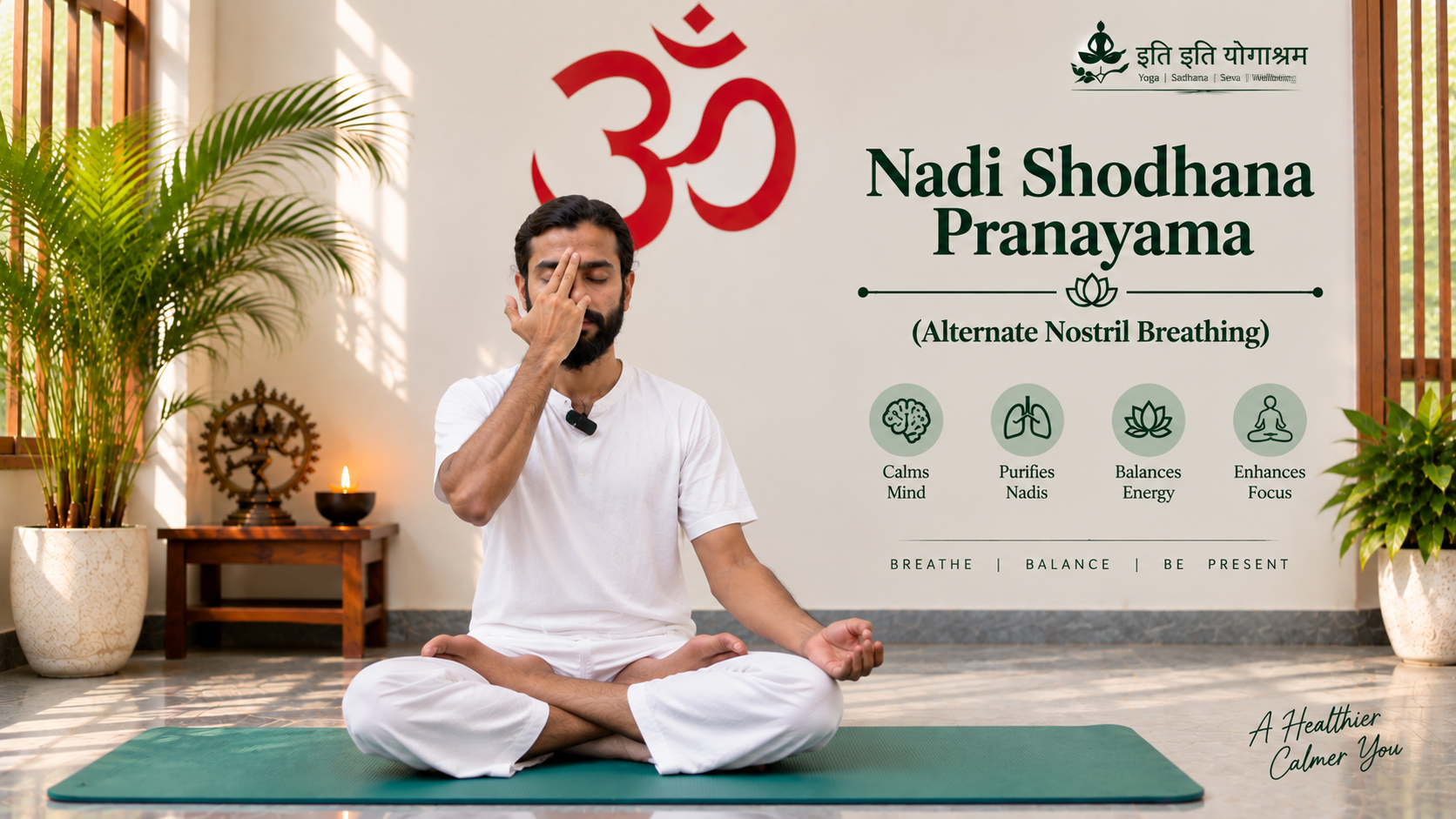
The Definitive Guide to Nadi Shodhana Pranayama (Alternate Nostril Breathing): Classical Origins, Vagal Nerve Physiology, and Clinical Applications
Nadi Shodhana Pranayama, universally known as Alternate Nostril Breathing or Anuloma Viloma Pranayama, stands as one of the most powerful, balanced, and deeply calming respiratory practices within the classical Hatha Yoga matrix. Derived from the Sanskrit words nadi (meaning subtle energy channel or meridian), shodhana (meaning purification or cleansing), and pranayama (breath control or life-force expansion), this technique utilizes controlled digital manipulation of the nostrils to balance airflow, harmonize the sympathetic and parasympathetic nervous systems, and clear energetic blockages throughout the body. This comprehensive manual synthesizes classical scriptural frameworks with modern respiratory physiology and peer-reviewed biomedical research, serving as a definitive reference for yoga teachers, therapists, and advanced practitioners.
1. Comprehensive Benefits of Nadi Shodhana Pranayama
Physical & Structural Benefits
- Autonomic Nervous System Regulation: Enhances parasympathetic tone, reducing sympathetic hyper-arousal and lowering resting heart rate and systemic blood pressure.
- Optimization of Pulmonary Function: Improves vital capacity, tidal volume efficiency, and oxygenation saturation across lung tissue segments.
- Enhanced Heart Rate Variability (HRV): Increases cardiac autonomic stability, reflecting improved resilience to physical and psychological stress.
- Sinus and Nasal Passageway Balancing: Regulates nasal airflow cycles, promoting balanced mucosal secretion and clearing upper respiratory congestion.
Mental & Emotional Benefits
- Deep Psychological Stabilization: Effectively mitigates acute anxiety, panic responses, mental fatigue, and emotional reactivity.
- Cognitive Enhancement and Focus: Promotes alpha-wave EEG brain activity associated with calm, focused mental clarity and executive function.
Spiritual & Subtle Energy Benefits
- Purification of Ida and Pingala Nadis: Traditional subtle anatomy dictates that balancing breath between the left (lunar/Ida) and right (solar/Pingala) nostrils harmonizes the dual currents of the subtle body, directing prana into the central Sushumna channel. Traditional yogic belief; scientific evidence is limited.
- Awakening of Higher States of Consciousness: Clears mental fluctuations (citta vritti), establishing the mind in deep meditative quietude prior to dhyana. Traditional yogic belief; scientific evidence is limited.
2. Step-by-Step Practice Guide
To experience the full physiological and energetic benefits of Nadi Shodhana safely while safeguarding the cervical spine and respiratory rhythm, execute using these precise progressive stages:
-
The Seated Foundation and Hasta Mudra Setup
- Action: Sit in a comfortable meditative posture (such as Padmasana, Siddhasana, or Sukhasana) with an upright spine, relaxed shoulders, and an open chest. Rest your left hand on your left knee in Chin Mudra or Jnana Mudra. Raise your right hand toward your nose, folding your index and middle fingers down toward your palm (Vishnu Mudra), keeping your thumb free for the right nostril and your ring and pinky fingers free for the left nostril.
- Breathing: Take 3 to 5 slow, unforced diaphragmatic breaths to center your awareness.
- Alignment: Keep your spine straight, chin slightly tucked (Jalandhara-prepared neck position), and avoid leaning your head forward or laterally toward your hand.
- Common Mistake: Slumping the spine or lifting the right elbow too high, which creates tension in the shoulder girdle and neck.
- Correction: Lower your right elbow comfortably close to your ribcage and stack your vertebrae into a tall, upright column.
- Teacher Cue: "Sit tall, fold your index and middle fingers into Vishnu Mudra, and keep your right elbow relaxed against your ribs."
-
The Initial Inhalation and Nostril Alternation Cycle
- Action: Close your right nostril gently with your right thumb. Inhale slowly, smoothly, and silently through your open left nostril to a comfortable count (e.g., a count of 4). At the peak of inhalation, close your left nostril with your ring/pinky fingers, release your thumb from the right nostril, and exhale completely through the right side to an equal count (e.g., a count of 4).
- Breathing: Keep the airflow smooth, unbroken, and soundless. Avoid gasping or forcing the volume of air.
- Alignment: Maintain facial relaxation, ensuring no crinkling of the forehead or tightening of the jaw.
- Common Mistake: Collapsing the nasal cartilage by pressing too hard with the fingers, restricting the internal airway.
- Correction: Apply only light, gentle lateral pressure on the fleshy wing of each nostril.
- Teacher Cue: "Inhale softly through the left, switch sides, and exhale completely through the right. Keep your breath silent and steady."
-
Completing the Full Round and Ratio Integration
- Action: Inhale through your right nostril, close it, and exhale completely through your left nostril. This completes one full round of Nadi Shodhana. Maintain a steady ratio (such as 1:1 inhalation-to-exhalation, or progressing over months to 1:2 inhale-to-exhale under expert guidance) for 5 to 10 complete rounds.
- Breathing: Maintain continuous, slow diaphragmatic pacing. Never introduce breath retention (kumbhaka) until you have mastered smooth, unforced 1:1 airflow over months of consistent practice.
- Alignment: Keep your breath rhythm even and unhurried; if you feel air hunger, shorten the count immediately.
- Common Mistake: Rushing the cycle or breathing shallowly into the upper chest.
- Correction: Anchor your awareness in your lower abdomen, ensuring your diaphragm drives every inhalation.
- Teacher Cue: "Inhale right, exhale left to finish one round. Let your breath flow like a continuous, smooth wave."
-
The Mindful Completion and Release
- Action: After completing your final round with an exhalation through the left nostril, lower your right hand down to your knee. Keep your eyes closed and return to natural, spontaneous breathing for 1 to 2 minutes, observing the internal state of quietude.
- Breathing: Allow your breath to return to its unmanipulated organic rhythm.
- Alignment: Maintain your tall seated posture as you transition out.
- Common Mistake: Opening the eyes too abruptly or moving immediately into high-stimulus activity.
- Correction: Transition slowly, retaining your internal meditative awareness.
- Teacher Cue: "Lower your hand, release all breath control, and observe the calm stillness settling in your mind."
3. Common Alignment Mistakes & Technical Corrections
Avoiding technical compensation patterns is essential to prevent chronic tension and ensure effective nervous system regulation:
| Identified Mistake | Anatomical Consequence | Biomechanical Correction |
|---|---|---|
| Lifting and Straining the Right Shoulder | Generates muscle fatigue, trapezius tightness, and cervical spine stiffness. | Drop your right elbow down close against your ribcage to support your arm weight effortlessly. |
| Audible, Raspy, or Forced Breathing | Indicates sympathetic nervous system activation and excessive respiratory effort. | Soften your airway and reduce your inhalation volume so the breath remains completely silent. |
| Leaning the Head Toward the Hand | Creates asymmetrical cervical spine flexion and neck strain over prolonged rounds. | Keep your head perfectly upright, moving your hand to your nose rather than your nose to your hand. |
| Forcing Breath Retention (Kumbhaka) Too Early | Triggers carbon dioxide accumulation panic, spikes blood pressure, and induces anxiety. | Omit breath retention entirely until your 1:1 or 1:2 cycles are effortless and calm. |
Figure 1: Autonomic and energetic balancing map illustrating alternate airflow channels through Ida and Pingala merging toward central stability in Nadi Shodhana.
4. Contraindications & Precautions
While exceptionally therapeutic and universally safe when practiced without retention, Nadi Shodhana should be modified or avoided under the following conditions:
- Acute Asthma or Severe Obstructive Pulmonary Attacks: Manipulating airflow during active respiratory distress can worsen breathlessness; practice only natural breathing until stabilized.
- Advanced Uncontrolled Hypertension (During Retention): Introducing breath retentions (kumbhaka) spikes intracranial and blood pressure; retainers must be avoided entirely by hypertensive practitioners.
- Severe Major Depressive Episodes or Psychotic Disorders: Intense inward breath concentration can sometimes exacerbate acute dissociation or ungrounded mental states; practice under clinical supervision.
- Acute Nasal Obstructions or Deviated Septum Infections: Forcing air through a blocked sinus passage causes irritation; use gentle clearing or practice mental visualization instead.
5. Intelligent Sequencing Protocols
Sequencing Summary Matrix
- Preparatory Asanas & Cleansing: Comfortable seated asana (Sukhasana, Padmasana) with spinal alignment; optional mild Kapalabhati (Skull-Shining Breath) to clear passages if appropriate.
- Follow-up Counter Practices: Natural silent meditation, Shavasana (Corpse Pose), or silent mindfulness observation.
- Key Progressions & Variations: Progression from 1:1 ratio to 1:2 ratio (exhalation twice as long as inhalation), followed over years by safe, controlled internal/external retention (antar/bahya kumbhaka).
- Structural Integration: Positioned as the bridge between active asana practice and deep meditation, or as a standalone nervous system reset at any time of day.
Comprehensive Sequencing Context
An effective yoga practice transitions the practitioner progressively from gross physical movement toward subtle internal awareness. Nadi Shodhana serves as the ultimate transitional bridge. Following physical asana practice and before entering seated meditation or dhyana, Nadi Shodhana quiets the sympathetic nervous system and centers cognitive faculties. Placing this practice here allows the practitioner to harness the open energy channels, establishing profound mental stillness and emotional equilibrium.
6. Strategic Modifications for Special Populations
Yoga should adapt to the unique physiological needs of the individual body. Use these specialized modifications to keep the practice accessible and therapeutic:
-
For Beginners or Practitioners with Arm/Shoulder Fatigue:
- Support your right elbow with your left hand, or rest your right elbow on a bolster placed on your lap to eliminate shoulder and arm strain during practice.
-
For Practitioners with Chronic Nasal Congestion:
- Practice mental Nadi Shodhana (visualizing the breath moving up one side and down the other) without physical finger manipulation if congestion blocks airflow completely.
-
For Seniors or Chair Practitioners:
- Sit upright in a sturdy chair with both feet flat on the floor, ensuring the spine remains tall and uncompressed throughout the breathing cycle.
-
For Hypertension and Cardiovascular Conditions:
- Strictly maintain a 1:1 smooth inhalation and exhalation ratio with zero breath retention (no kumbhaka) to keep blood pressure stable and relaxed.
7. Historical Background & Classical Scriptural References
Nadi Shodhana holds a foundational position within classical Hatha Yoga texts, recognized as the premier technique for purifying subtle energy channels.
Classical Scriptural Context
Scripturally referenced in the Hatha Yoga Pradipika (Chapter 2, Verses 7–10) and the Gheranda Samhita, Nadi Shodhana is praised as the supreme purifier of the 72,000 nadis in the subtle body. Classical texts emphasize that when nadis are filled with impurities, prana cannot enter the central Sushumna channel; thus, systematic purification via alternate nostril breathing is a mandatory prerequisite for higher meditative absorption.
Modern Institutional Refinements
Modern research institutions such as Kaivalyadhama and S-VYASA have extensively validated the physiological mechanisms of Nadi Shodhana, confirming its immediate parasympathetic shift, heart rate variability improvement, and EEG brainwave harmonization.
8. Biomechanical and Anatomical Analysis
Primary Movers and Muscle Actions
- Respiratory Diaphragm: Acts as the primary muscular driver of inhalation and exhalation, descending smoothly during inhalation and ascending during exhalation.
- Intercostal Muscles (External and Internal): Expand and contract the thoracic cage rhythmically to optimize tidal volume and airflow efficiency.
- Scalenes and Sternocleidomastoid (Stabilizers): Maintain gentle postural tone without excessive tension in the upper neck.
- Postural Spinal Erectors: Keep the spinal column upright and tall without slouching or compressive fatigue.
Biomechanics and Physiological Pathways
- Vagal Nerve Stimulation: Slow, controlled exhalations stimulate parasympathetic fibers of the vagus nerve, reducing heart rate and endocrine stress hormone output.
9. Systemic Physiological Effects
- Nervous System: Shifts autonomic balance from sympathetic dominance toward parasympathetic dominance, lowering cortisol and adrenaline production.
- Respiratory System: Enhances pulmonary ventilation efficiency, stabilizes breathing rate, and expands vital capacity over time.
- Cardiovascular System: Decreases resting systolic and diastolic blood pressure, improves heart rate variability (HRV), and reduces cardiac workload.
- Endocrine System: Regulates hypothalamic-pituitary-adrenal (HPA) axis reactivity, promoting hormonal equilibrium and stress resilience.
10. Clinical Research & Therapeutic Applications
Modern cardiology, psychology, and respiratory medicine literature provide robust evidence supporting the clinical use of Nadi Shodhana:
- Cardiovascular and Autonomic Modulation Trials: Clinical studies published in peer-reviewed journals confirm that short-term practice of alternate nostril breathing significantly decreases systolic blood pressure, heart rate, and anxiety scores while improving autonomic nervous system balance.
- Disclaimer: The therapeutic applications discussed here are meant for educational purposes and to support overall wellness. They are not a replacement for professional medical diagnosis, targeted advice, or customized clinical treatment plans. Always consult a qualified healthcare provider or physician when managing chronic cardiovascular, respiratory, or psychological health conditions.
11. Teaching Methodology: Cues and Adjustments
Verbal & Imagery Cues
- "Sit tall with an upright spine, fold your index and middle fingers into Vishnu Mudra, and rest your right elbow comfortably against your ribs."
- "Inhale softly and silently through your left nostril, feeling the breath rise like a cool wave up to the third eye center."
- "Exhale completely and smoothly through your right nostril, letting go of all tension with every wave of breath."
Safe, Non-Invasive Hands-On Adjustments
- Spinal and Postural Alignment Support: Standing gently behind a seated student, the teacher can place light fingertips on the student's shoulders to cue relaxation, or provide a folded blanket under the sit bones to eliminate slouching.
- Safety Note: Never touch or manipulate a student's face, nose, or head during breathing practices. Allow the student total autonomy over their hand position and nostril pressure.
12. Myth vs. Fact Analysis
- Myth: Alternate nostril breathing physically forces air to travel directly into specific brain hemispheres or clean out physical mucus from the brain.
- Fact: Air enters both lungs regardless of which nostril is open, but alternate nostril breathing modulates autonomic nervous system balance, nasal cycle resistance, and neural signaling via trigeminal pathways.
- Myth: You must practice breath retention (kumbhaka) immediately to get any benefits from Nadi Shodhana.
- Fact: Practising Nadi Shodhana with a smooth, continuous 1:1 inhalation-to-exhalation ratio without any retention delivers powerful parasympathetic and cardiovascular benefits safely.
Quick Reference Facts Table
| Sanskrit Name | Nāḍī Śodhana Prāṇāyāma (नाडी शोधन प्राणायाम) / Anuloma Viloma |
| English Name | Alternate Nostril Breathing |
| Difficulty Level | Beginner to Advanced (Scalable from simple 1:1 ratios to complex ratio/retention practices) |
| Primary Physiological Focus | Parasympathetic Nervous System, Vagal Nerve Stimulation, Heart Rate Variability, Autonomic Balance |
| Primary Respiratory Mechanics | Diaphragmatic Breathing, Controlled Unilateral Nasal Airflow, Balanced Inhalation/Exhalation Ratios |
| Traditional Subtle Channels | Purification and Balancing of Iḍā, Piṅgalā, and Suṣumnā Nāḍīs |
| Ayurvedic Constitution Impact | Balances all three doshas (Vata, Pitta, Kapha); exceptionally calming for Vata and Pitta |
Frequently Asked Questions (FAQ)
Q1: What is the primary physiological purpose of Nadi Shodhana Pranayama?
A: The primary purpose is to balance the autonomic nervous system, enhance parasympathetic tone, improve heart rate variability (HRV), and calm mental agitation.
Q2: Why do we fold the index and middle fingers down in Vishnu Mudra?
A: Folding the index and middle fingers down keeps them out of the way, allowing your thumb and ring/pinky fingers to control the right and left nostrils comfortably without wrist strain.
Q3: Should I practice breath retention (kumbhaka) when starting Nadi Shodhana?
A: No. Beginners should master a smooth, silent 1:1 inhalation and exhalation ratio without any breath retention for months before exploring retentions under expert guidance.
Q4: What should I do if one of my nostrils feels completely blocked during practice?
A: Do not force air through a blocked passage. Apply lighter pressure, breathe through whatever opening is available, or use mental visualization of the breath until the nasal cycle shifts naturally.
Q5: Can Nadi Shodhana help reduce acute anxiety and stress?
A: Yes. Slow, controlled alternate nostril breathing stimulates the vagus nerve and triggers a rapid parasympathetic response, effectively lowering heart rate and soothing anxiety.
Q6: How many rounds of Nadi Shodhana should a beginner practice daily?
A: Beginners can comfortably start with 5 to 10 complete rounds (taking about 3 to 5 minutes), gradually increasing duration as their respiratory capacity expands.
Q7: Is Nadi Shodhana safe to practice during pregnancy?
A: Yes, Nadi Shodhana practiced without any breath retention (keeping a comfortable 1:1 ratio) is exceptionally safe, calming, and beneficial for pregnant practitioners.
Q8: Why must the breath be silent and unforced during the practice?
A: Raspy or forced breathing signals sympathetic nervous system activation and muscular tension. Silent, smooth breathing ensures the nervous system remains in a relaxed, restorative state.
Q9: Can I practice Nadi Shodhana lying down if sitting upright is uncomfortable?
A: While upright seated posture is traditional to keep the spine alert, practitioners with physical fatigue or injury can practice supported in a comfortable chair or lying down in Shavasana.
Q10: What is the relationship between Nadi Shodhana and Anuloma Viloma?
A: In modern yoga practice, the terms are frequently used interchangeably, though classical texts sometimes distinguish Anuloma Viloma as a broader category incorporating specific ratios and retentions.
Q11: How does Nadi Shodhana affect high blood pressure?
A: Practiced without breath retention, Nadi Shodhana helps reduce resting blood pressure by easing sympathetic tone. However, breath retention must be avoided by those with hypertension.
Q12: Should I breathe into my chest or my abdomen during this practice?
A: Breathing should be driven by the diaphragm into the lower abdomen and ribcage, ensuring deep, efficient pulmonary ventilation rather than shallow upper-chest breathing.
Q13: What time of day is best to practice Nadi Shodhana?
A: It can be practiced anytime you need mental reset, but early morning before asana/meditation or evening before sleep are ideal times to harmonize energy.
Q14: What is the best way to transition out of the practice?
A: Lower your hand gently, let go of all breathing control, and sit in silent observation for a minute or two to integrate the calming effects.
Refine your breathwork technique and deepen your personal practice under expert guidance.
Connect with Iti Iti Yogashram