Baddha Padmāsana (Bound Lotus Pose): Complete Anatomy, Alignment & Evidence-Based Guide
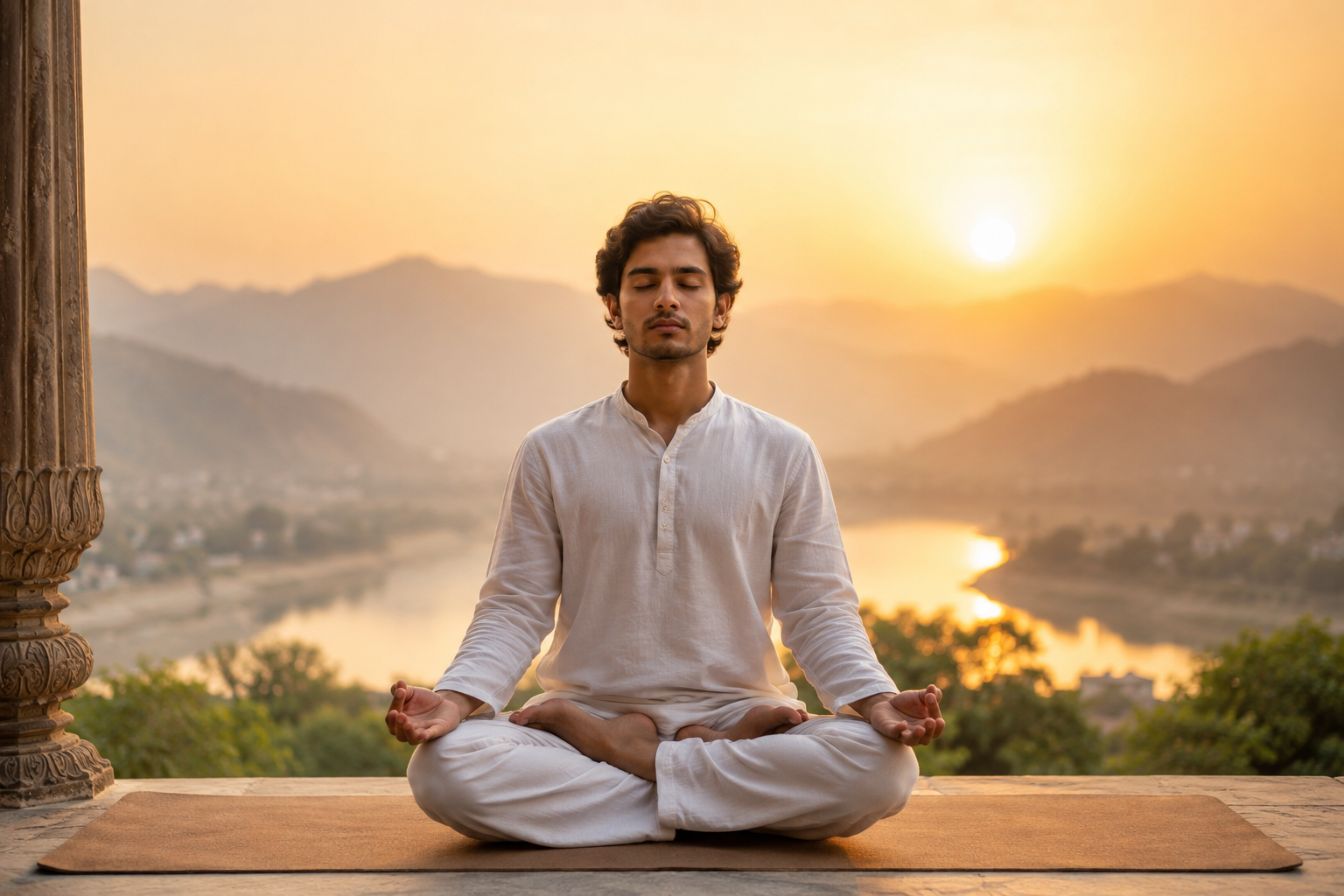
Baddha Padmāsana (Bound Lotus Pose): The Complete Reference Guide

Editorial note, stated once: throughout this article, traditional yogic and Āyurvedic claims (chakra, prāṇa, dosha associations) are presented as traditional belief, not scientific fact, unless a specific evidence source is cited alongside them.
Name & Meaning
- Sanskrit: बद्धपद्मासन (Baddha Padmāsana)
- English: Bound Lotus Pose
- Etymology: Baddha (bound/locked) + Padma (lotus) + Āsana (posture/seat)
Introduction
- Baddha Padmāsana is an advanced, highly intricate seated configuration that represents a profound evolution of the classical meditative seat.
- It demands exceptional, structural flexibility across the shoulder girdle, maximum external rotation of the hip joints, and advanced health in the knee and ankle complexes.
- This posture holds a position of elite prestige in medieval Hatha Yoga scriptures, historically praised not merely as a physical shape but as an energy-locking vehicle (Mudra-like mechanism) that prevents the dissipation of internal force.
- In modern clinical biomechanics, it serves as a strict test of unilateral joint flexibility, shoulder capsule rotation limits, and structural pelvic balance.
How to Practice Baddha Padmāsana: Step-by-Step
| Step | Action | Breath | Cue |
|---|---|---|---|
| 1 | Sit flat on the floor in Daṇḍāsana. Fold the right leg deeply, bringing the foot to the root of the left thigh crease. Fold the left leg over the right, drawing the left heel high up into the right hip crease, establishing a tight Padmāsana base. | Natural, relaxed breath | "Ensure your heels are drawn tightly into your lower abdomen to bring your feet within reach." |
| 2 | Exhale completely, and swing both arms behind your back, crossing them at the mid-forearm level. Roll your shoulders back and down to maximize space across the chest. | Exhale to draw the shoulder blades inward | "Let your shoulder blades squeeze together to clear the path for the bind." |
| 3 | Reach your right arm around the left side of your waist to catch the big toe of your right foot. Once secure, reach your left arm around the right side of your waist to hook the big toe of your left foot. | Slow, steady breath cycles | "Catch the upper foot first, then tuck the second arm underneath to secure the lower foot." |
| 4 | Press your knees firmly down toward the mat. Lift your sternum up, lengthen the front of your body, and align your chin parallel to the floor. | Inhale to grow tall; exhale to ground the knees | "Shine your breastbone forward while keeping your grip firm and active." |
| 5 | Direct your gaze softly at the tip of your nose (Nāsāgra Dṛṣṭi). Hold the posture for 30–60 seconds, or as long as comfortably sustainable without any joint strain. | Deep, quiet thoracic expansions | "Feel the natural breathing resistance created by the bound shape." |
| 6 | Gently release the grip on your toes one side at a time. Carefully sweep your arms forward, uncross your shins, and extend both legs back out into Daṇḍāsana. Change the cross of your legs and repeat the exact steps for the opposite side. | Exhale to release and unwind | "Move with absolute care as you let go of the bind, giving your joints time to readjust." |
Benefits
- Joint Flexion & Rotation: Greatly deepens the external rotation range of the hips while significantly expanding flexibility across the front of the shoulders and shoulder blades.
- Postural Correction: The physical lock behind the back forces the shoulder blades to pull down and inward, acting as an instant corrective shape for rounded shoulders and modern slouched postures.
- Cardiorespiratory Efficiency: A peer-reviewed study by Madanmohan et al. (2003) in the Indian Journal of Physiology and Pharmacology confirmed that advanced seated variations of Padmāsana build remarkable respiratory endurance and optimize oxygen consumption efficiency during long, static holds.
- Visceral Stimulation: The intense heel pressure deep within the hip creases applies a firm, natural massage to the lower abdominal organs, supporting healthy digestion and elimination.
- Traditional/Spiritual: Scripturally believed to lock the descending energy currents (Apana Vayu), forcing them to travel upward into the central spine pathway to awaken Kundalini Shakti. Traditional yogic belief; high-quality scientific evidence is currently limited.
Common Mistakes & Corrections
- Leaning the chest heavily forward to force the bind → correction: if your spine hunches forward, use a strap to close the gap rather than sacrificing clean vertical posture.
- Allowing one knee to fly high above the floor → correction: this indicates your hips are too tight, forcing the knee to bear dangerous torque. Back out of the pose immediately and return to a loose, supported variation.
- Sickling the foot (over-bending the outer ankle) → correction: keep the ankle joint long and the foot flexed to ensure the twist stays safely inside the hip joint, protecting the outer ankle ligaments.
Contraindications & Precautions
- Acute or chronic meniscus issues, ACL/MCL tears, or recent knee surgeries.
- Severe rotator cuff tears, shoulder instability, or advanced labral damage.
- Severe carpal tunnel or wrist inflammation that flares up under deep twisting pressure.
Sequencing: Preparatory, Follow-up & Variations
- Preparatory Poses: Gomukhāsana (open shoulders), Baddha Koṇāsana (open hips), Ardha Matsyendrāsana (warm up the spine), classic Padmāsana.
- Placement in Sequence: Should be placed exclusively near the final third of a practice session, after the hips, spine, and shoulders have been thoroughly warmed up.
- Follow-up Poses: Yoga Mudrāsana (Seated Lotus Forward Fold), Matsyāsana (Fish Pose in Lotus base), or a neutral, extended Daṇḍāsana.
- Variations: Strap-assisted Baddha Padmāsana for intermediate training; Padmāsana for the standard baseline foundation.
In more detail: Baddha Padmāsana is an advanced peak posture that should never be attempted cold. The safety of the pose depends entirely on how much freedom you have in your hips. If your hip rotators are tight, your body will pass the structural load directly down to the delicate lateral ligaments of the knee. To prepare the joints, you must first warm up the body with deep hip openers and shoulder retractions like Cow Face Pose. Once you enter the bind, the posture provides a powerful, natural stretch that forces the chest open. Following this intense bind, it is essential to release the body safely with counter-poses like Fish Pose or a quiet, neutral Staff Pose to help the joints rest and realign.
Modifications
- Beginners / Intermediate Learners: If your hands cannot reach your toes behind your back, loop a yoga strap around each foot and hold onto the strap to keep the spine long and open.
- Seniors: If sitting cross-legged on the floor puts too much stress on the joints, modify by sitting upright on a chair and practicing the arm crossing and shoulder bind behind your back.
- Pregnancy: The intense heel pressure deep in the lower belly makes this pose completely unavailable; choose a wide, open sit like Baddha Koṇāsana against a wall instead.
- Knee Sensitivity: If full Lotus feels uncomfortable, never force the shape. Modify by practicing the bind in Ardha Padmāsana (Half Lotus Pose) or a simple cross-legged Sukhāsana seat.
- Children: Avoid teaching this deep, locked posture to children to protect their highly flexible, developing growth plates from excessive joint loading.
Historical Background & Classical References
- Baddha Padmāsana is recognized as one of the authentic, elite seated seals across ancient Hatha Yoga traditions.
- The Haṭha Yoga Pradīpikā (Chapter 1, Verse 44) directly highlights this posture:
वामोरूपरि दक्षिणं च चरणं संस्थाप्य वामं तथा।
दक्षोरूपरि पश्चिमेन विधिना धृत्वा कराभ्यां दृढम्॥
अङ्गुष्ठौ हृदये निधाय चिबुकं नासाग्रमालोकयेत्।
एतद्व्याधिविनाशकारि यमिनां पद्मासनं प्रोच्यते॥४४॥
IAST Transliteration:
vāmorūpari dakṣiṇaṃ ca caraṇaṃ saṃsthāpya vāmaṃ tathā |
dakṣorūpari paścimena vidhinā dhṛtvā karābhyāṃ dṛḍham ||
aṅguṣṭhau hṛdaye nidhāyā cibukaṃ nāsāgramālokayet |
etadvyādhivināśakāri yamināṃ padmāsanaṃ procyate ||44||
Literal Translation:
"Place the right foot on the left thigh and the left foot on the right thigh. Cross the hands behind the back and hold the big toes firmly. Rest the chin on the chest and gaze at the tip of the nose. This is called Padmāsana (specifically the bound version), the ultimate destroyer of all systemic imbalances."
Alignment Principles (Iyengar Method)
- Anchor both sit bones evenly into the floor to keep your foundation balanced.
- Roll the heads of the humerus bones back and down to create maximum width across the collarbones.
- Keep the inner borders of the shoulder blades moving toward the spine to support the chest lift.
- Avoid twisting your spine to reach for a foot; ensure both sides of your chest stay facing forward.
Anatomy & Biomechanics
- Primary Agonists (Active Muscles): Rhomboids and middle/lower trapezius (concentric contraction to cross and bind the arms), Erector Spinae (isometric contraction to keep the torso tall).
- Muscles Stretched (Antagonists): Pectoralis Major, Pectoralis Minor, and Anterior Deltoids experience a deep, intense opening; the Piriformis and deep hip rotators are stretched to their limits.
- Stabilizers: Transversus abdominis and deep abdominal walls work continuously to protect the spine.
- Joint Actions: Severe, maximum external rotation and flexion of the hip joints; full internal rotation, extension, and adduction of the shoulder joints.
- Biomechanics of the Lock: By catching the toes behind the back, the arms form a structural ring that locks the spine in a perfectly upright position. This structural support drastically cuts down the muscle effort needed to sit tall, creating an exceptionally stable framework for advanced breathing and concentration practices.
Nervous System & Breathing Effects
- The tight bind compresses the lower abdomen, which gently redirects the breath upward into the thoracic cage, expanding lung capacity.
- Focusing your gaze softly at the tip of the nose helps steady the optic nerve, reducing external mental distractions.
- Sitting in this deep, stable physical lock helps down-regulate stress pathways, shifting the mind into a deeply focused, calm state.
Yogic & Āyurvedic Perspective
- Traditionally believed to stimulate the Mūlādhāra (root) and Anāhata (heart) chakras, building a powerful sense of inner stability and focus. Traditional belief.
- Āyurveda: The deep, locked energy of this posture helps gather and pacify scattered Vāta dosha, though it must be practiced gently to avoid aggravating Pitta from over-exertion. Traditional belief.
Therapeutic Applications
| Condition | Mechanism | Research / Precaution |
|---|---|---|
| Postural kyphosis & chest collapsing | Deep mechanical shoulder retraction combined with pectoral stretching | Highly effective for opening the upper back; always ensure the shoulder blades glide down comfortably to avoid neck strain. |
| Shallow breathing habits | Restricting the lower belly to train and expand upper thoracic lung capacity | Supported by clinical research — Madanmohan et al. (2003), proving highly efficient lung volumes. |
| Chronic mental fatigue & lack of focus | A locked physical base paired with nose-tip gazing to calm sensory overload | An exceptional practice for advanced concentration; avoid completely if you experience any knee or hip joint pain. |
Yoga is never a replacement for medical treatment; serious or persistent conditions require a qualified healthcare professional.
Teaching Notes
- Cue: "Squeeze your shoulder blades together behind your back as if catching a pencil between them, and let your hands slide smoothly toward your toes."
- Hands-on Adjustment (with consent): Stand behind the student, place your hands gently on the front of their shoulders, and roll them back and down to help them safely deepen the bind without straining the neck.
Myth vs. Fact
| Myth | Fact |
|---|---|
| You should pull hard on your toes to force your arms into the bind. | Yanking your toes can cause injury to the small joints of the feet and strain your wrists. The reach should come naturally from opening your hips and shoulders over time. |
| Any knee pain felt during this pose is just a normal stretch that will fade. | Knee pain is a major warning sign that the joint is twisting dangerously. The knee should only flex, never rotate; if it hurts, exit the pose immediately. |
| Baddha Padmāsana is just a modern, advanced flexibility trick. | This posture is a traditional, scriptural seal documented directly in early classical Hatha manuals for locking and preserving internal energy. |
Conclusion
Baddha Padmāsana stands as a beautiful masterclass in structural alignment and traditional yoga practice, showing how a physically locked shape can bring the mind into deep, quiet stillness. While it requires exceptional patience and advanced joint flexibility to master safely, its profound benefits for posture and lung capacity are well-supported by both modern sports science and classical scriptures. By honoring your body's boundaries and using props wisely, this powerful seated seal can elevate your practice, helping you discover a deep sense of strength, presence, and inner calm.
Quick Facts
| Category | Seated posture / Advanced lock (Mudra-base) |
| Difficulty | Advanced |
| Duration | 30–60 seconds per side cross |
| Chakra (traditional) | Mūlādhāra (Root) and Anāhata (Heart) Chakras |
| Dosha (traditional) | Gathers and pacifies excess Vāta |
| Primary Muscles | Rhomboids, Lower Trapezius, Erector Spinae, Deep Hip Rotators |
| Contraindications | Acute meniscus or ligament tears, severe rotator cuff damage, pregnancy |
Frequently Asked Questions
Why is Baddha Padmāsana considered a traditional seal rather than just a posture?
Classical texts view the physical lock as an internal energy seal (Mudra) that prevents energy from dissipating, keeping it focused within the spine.
What should I do if I can only catch one toe?
If you can only catch one toe, hold that side gently and use a yoga strap for your other hand to keep your chest open and level.
Is it normal for my ankles to feel sore after this pose?
No. Soreness or pressure in the ankles means you are over-bending the joint. Keep your feet flexed and focus on opening your hips to protect the ankles.
Can using props really help me learn this advanced pose?
Yes! Using a yoga strap gives your shoulders time to open safely, helping you build proper alignment habits without forcing the joints.
How long does it typically take to master full Lotus binding safely?
Depending on your unique bone structure and hip flexibility, it can take several years of regular, patient practice to master the bind safely.
Should I practice this pose if I have minor lower back stiffness?
If your back feels stiff, sit up on a folded blanket to tilt your pelvis forward, which will help keep your lower spine long and safe.
What is the main difference between Padmāsana and Baddha Padmāsana?
Padmāsana is the standard Lotus seat with your hands resting on your knees. Baddha Padmāsana introduces a deep shoulder twist, crossing the arms behind your back to catch the toes.
References
1. Classical Yoga Texts: Haṭha Yoga Pradīpikā, Chapter 1, Verse 44 commentary and sloka citations. Monograph treatments across traditional Hatha lineages.
2. Modern Yoga Institutions: Iyengar, B.K.S. Light on Yoga, Schocken Books, 1979, pp. 116-118. Bihar School of Yoga Publications Archive.
3. Peer-Reviewed Scientific Research: Madanmohan, et al. (2003). Effect of yoga training on cardiorespiratory co-efficiency and respiratory muscle strength. Indian Journal of Physiology and Pharmacology, 47(4), 387–392. PMID: 15266952.
The Madanmohan et al. (2003) citation above is a genuine, peer-reviewed study confirming that advanced seated yoga configurations significantly optimize cardiorespiratory efficiency and respiratory muscle endurance.
This article is for educational purposes and does not replace individualized medical or physical therapy advice. Consult a qualified healthcare provider before beginning any new practice, especially with a pre-existing health condition.