Ardha Padmāsana (Half Lotus Pose): Complete Anatomy, Alignment & Evidence-Based Guide
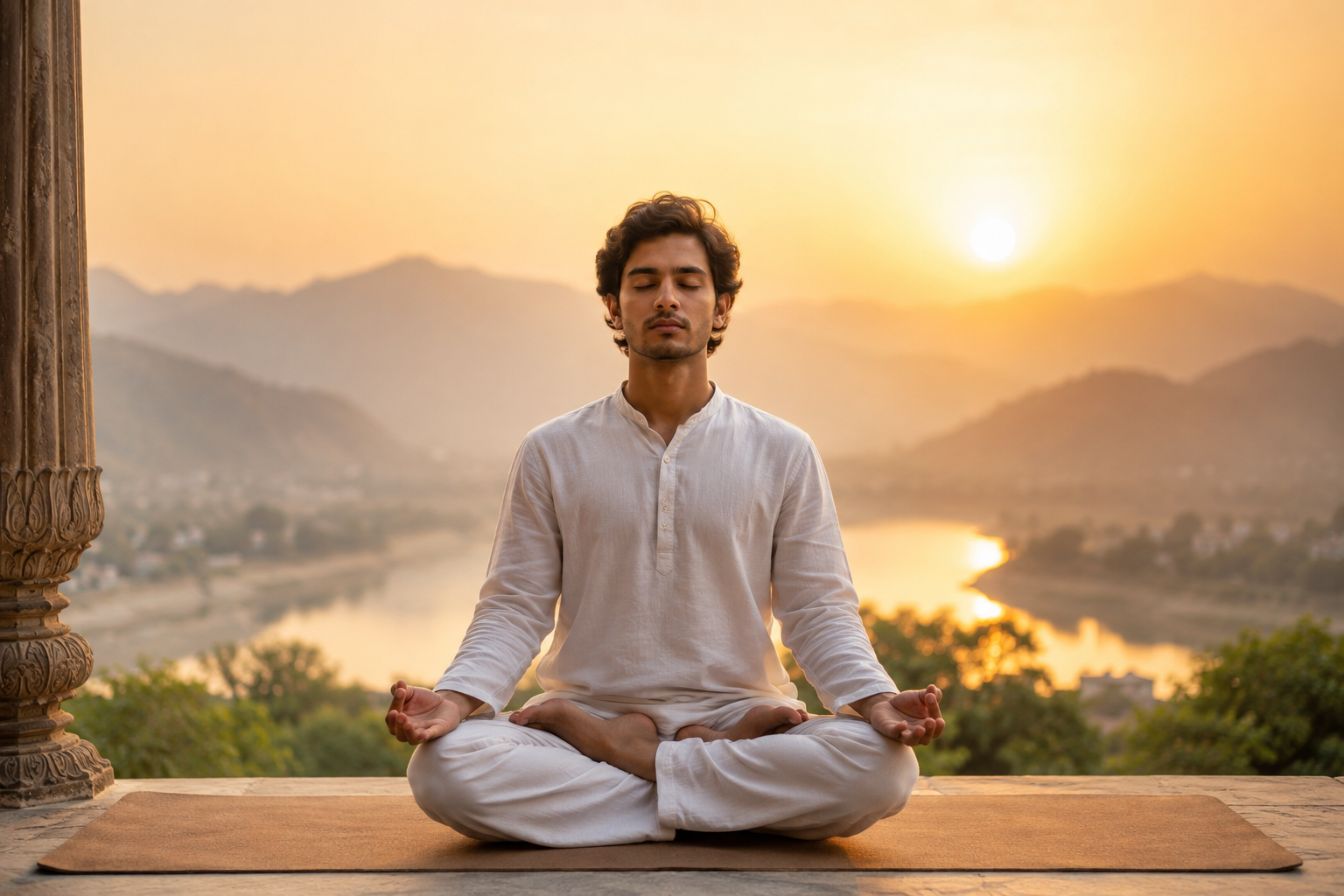
The Definitive Guide to Ardha Padmāsana (Half Lotus Pose): Classical Origins, Biomechanics, and Clinical Applications
Ardha Padmāsana, universally known as Half Lotus Pose, stands as a foundational and highly revered meditative seat within the classical Hatha Yoga matrix. Serving as a crucial preparatory gateway to full Padmāsana, this asymmetric configuration requires precise external rotation of the hip socket, comfortable knee flexion, and an upright axial spine to sustain long periods of pranayama and mental concentration. This comprehensive manual synthesizes classical scriptural frameworks with modern anatomical precision and peer-reviewed biomedical research, serving as a definitive reference for yoga teachers, therapists, and practitioners.
1. Comprehensive Benefits of Ardha Padmāsana
Physical & Structural Benefits
- Targeted External Hip Rotation: Safely increases mobility in the hip joint of the placed leg, stretching the deep external rotators (piriformis, obturator complex) and gluteals.
- Ankle and Ligament Conditioning: Deeply stretches the top of the foot and ankle complex (dorsiflexion and internal inversion adaptation) on the folded limb.
- Upright Axial Spine Extension: The secure locking base stabilizes the pelvis wide and flat, allowing the paraspinal muscles to easily maintain an effortless, upright posture without slouching.
- Pelvic Circulation and Tonicity: Opens the inner groin and pelvic basin, encouraging healthy circulation to the reproductive and excretory organs.
Mental & Emotional Benefits
- Meditation Stability: Provides a secure, locked triangular base of support that prevents physical fidgeting, facilitating deep mental concentration and inward focus (Pratyāhāra).
- Parasympathetic Nervous System Soothing: Grounded seated postures combined with smooth, unforced breathing encourage autonomic down-regulation and emotional calm.
Spiritual & Subtle Energy Benefits
- Activation of Mūlādhāra and Svādhiṣṭhāna Chakras: Traditional subtle anatomy dictates that grounding the root triangle while locking the heel into the lower abdomen seals vital life currents along the spine. Traditional yogic belief; scientific evidence is limited.
- Circulation of Prāṇa Vāyu: The symmetrical upper body alignment combined with a locked lower seat prevents energy from scattering, routing prāṇa smoothly upward into the central axis. Traditional yogic belief; scientific evidence is limited.
2. Step-by-Step Practice Guide
To experience the full biomechanical benefits of Ardha Padmāsana safely while safeguarding the knee meniscus and ankle ligaments, execute using these precise progressive stages:
-
The Seated Setup (The Foundation)
- Action: Sit tall on your mat with both legs extended straight out in front of you in Daṇḍāsana (Staff Pose). Bend your left knee and draw your left heel backward, placing the foot underneath your right thigh (similar to a comfortable cross-legged seat).
- Breathing: Inhale deeply, lifting through the crown of your head to create a tall, vertical spine.
- Alignment: Ensure your sitting bones rest evenly on the floor. If your lower back rounds, sit up on the edge of a firm folded blanket.
- Common Mistake: Slumping backward onto the tailbone, which collapses the lower spine and compresses the chest.
- Correction: Actively tilt your pelvis forward from the hip sockets, keeping your lower spine long and neutral.
- Teacher Cue: "Root your sitting bones down into the earth, growing tall through your spine before you fold any limb."
-
The Half Lotus Placement (The Hip Rotation Phase)
- Action: Bend your right knee, cup your right foot with both hands, and externally rotate the thigh from the hip socket. Gently lift your right ankle and place the top of your right foot high up into the crease of your left hip, with the sole of your foot facing upward toward the sky.
- Breathing: Exhale smoothly, relaxing your right hip socket downward with gravity.
- Alignment: The outer edge of your right foot should rest as close to the left hip crease as your flexibility permits, with the ankle neutral.
- Common Mistake: Forcing the foot up into the hip crease by bending the ankle joint directly, which creates sharp twisting torque across the knee ligaments.
- Correction: Ensure the rotation comes entirely from the hip socket, keeping the ankle straight and protected.
- Teacher Cue: "Rotate your leg from the hip socket, lifting your foot gently up into your opposite hip crease without twisting your ankle."
-
The Meditative Seal (Full Expression)
- Action: Rest your hands gently on your knees in Jnāna Mudrā (thumb and index fingertips touching) or palms facing upward. Lengthen the back of your neck, tuck your chin slightly (Jālandhara Bandha accent), and close your eyes, settling into steady diaphragmatic breathing.
- Breathing: Maintain continuous, steady diaphragmatic breathing. Expand the sides of your ribs with each inhale. Do not hold your breath.
- Alignment: Keep your shoulders broad and soft, your chest open, and your weight distributed evenly across your pelvis.
- Common Mistake: Straining to keep the top knee flat on the floor if hip external rotation is tight, which compresses the knee capsule.
- Correction: Allow the top knee to float naturally if needed, or slide a support prop beneath it.
- Teacher Cue: "Soften your shoulders away from your ears, balance your weight evenly, and let your breath settle into stillness."
-
The Mindful Release and Exit
- Action: To exit, gently open your eyes, use your hands to lift your right foot carefully out of the hip crease, and extend both legs straight out in front of you into Daṇḍāsana. Shake your legs out gently to restore circulation, and repeat on the opposite side.
- Breathing: Exhale fully as you unwind your legs, re-establishing steady diaphragmatic breathing.
- Alignment: Move slowly to prevent cramping in the feet or hips after a sustained hold.
- Common Mistake: Yanking or pulling the foot out of the hip crease hastily without using hand support.
- Correction: Cradle your foot with your hands, lifting it out with care and mindfulness.
- Teacher Cue: "Unwind your legs with care, extend them long, and gently bounce your knees to release."
3. Common Alignment Mistakes & Technical Corrections
Avoiding technical compensation patterns is essential to prevent chronic knee and ankle joint compression over time:
| Identified Mistake | Anatomical Consequence | Biomechanical Correction |
|---|---|---|
| Twisting the Ankle Instead of Hip | Forces the ankle joint to compensate for tight hips, leading to acute sprains and ligament strain. | Initiate all upward movement from the hip socket, keeping the ankle joint locked straight and neutral. |
| Forcing the Top Knee Downward | Puts severe torsional shear stress on the knee meniscus and inner collateral ligaments (MCL). | Never force the knee down; let it float naturally or support it with a blanket underneath. |
| Slumping and Rounding the Lower Back | Collapses the chest cavity, strains the paraspinal muscles, and makes sustained breathing difficult. | Sit up on a firm folded blanket to tilt your pelvis forward, stacking your vertebrae upright. |
| Asymmetric Pelvic Weight Distribution | Imbalances the base of support, creating tension along one side of the lower back and neck. | Check that both sitting bones press down equally into your support prop or mat. |
Figure 1: Biomechanical architecture map showing clean hip external rotation placing the foot in the opposite hip crease while the spine remains upright.
4. Contraindications & Precautions
While exceptionally therapeutic when adapted correctly, Ardha Padmāsana should be modified or avoided entirely under the following conditions:
- Acute Knee Meniscus Tears or Ligament Instability (MCL/ACL): The deep external rotation and flexion place direct torque on the knee joint; completely contraindicated during acute injury.
- Severe Ankle Sprains or Chronic Instability: Placing the foot high into the hip crease requires extreme ankle inversion and dorsiflexion adaptation; modify with simple cross-legged seats.
- Severe Lower Back Disc Herniations with Pain: If sitting upright unassisted causes lumbar spasming, use proper prop support or backrest assistance.
- Advanced Arthritis of the Hip or Knee: Joint degenerative changes limit safe external rotation and flexion ranges; avoid forcing the shape.
5. Intelligent Sequencing Protocols
Sequencing Summary Matrix
- Preparatory Asanas: Baddha Koṇāsana (Bound Angle Pose), Agnistambhāsana (Fire Log Pose - critical hip opener), Gomukhāsana, Vīrāsana.
- Follow-up Counter Poses: Daṇḍāsana (Staff Pose), gentle seated forward folds, knee and ankle circles, Savasana.
- Key Progressions & Variations: Padmāsana (Full Lotus Pose), Baddha Padmāsana (Bound Lotus Pose).
- Structural Integration: Positioned at the beginning of a practice session for seated meditation/pranayama, or near the end during cool-down meditation blocks.
Comprehensive Sequencing Context
An effective yoga sequence must prepare target structural tissues before subjecting them to deep mechanical loads. Ardha Padmāsana requires initial mobilization of the deep hip external rotators via Fire Log Pose and Bound Angle Pose. Placing Half Lotus after these preparatory hip openers ensures the knee joint is protected from torsional strain. Following execution, structural harmony must be restored by extending the legs straight out into Staff Pose and gently circling the ankles and knees. This systematic approach prevents joint stiffness and ensures safe connective tissue adaptation.
6. Strategic Modifications for Special Populations
Yoga should adapt to the unique architectural needs of the individual body. Use these specialized modifications to keep the practice accessible and therapeutic:
-
For Beginners with Tight Hips or Knee Discomfort:
- Practice Sukhasana (Simple Easy Pose) or Agnistambhāsana (Fire Log Pose) instead. These alternatives open the outer hips progressively without requiring the intense half-lotus foot placement.
-
For Individuals with Sensitive Knees:
- Slide a rolled-up blanket or small towel directly beneath the knee crease of the lifted leg, or place a support prop underneath the floating knee to eliminate unsupported torque.
-
For Practitioners Lacking Pelvic Uprightness:
- Sit up high on a stack of 2–3 firm folded blankets or a meditation cushion (Zafu). Elevating your hips tilts the pelvis forward automatically, making it effortless to keep your spine tall.
-
For Pregnant Practitioners:
- Seated meditative seats are wonderful during early pregnancy, provided the hips are well-supported on cushions. As the belly expands later in term, shift to supported chair seating or wide-legged restorative shapes.
7. Historical Background & Classical Scriptural References
Ardha Padmāsana holds a foundational position within classical Hatha Yoga methodologies, widely praised across ancient manuals as an essential meditative seat.
Hatha Yoga Pradipika (Chapter 1, Verse 4)
वामोरुपरि संस्थाप्य दक्षिणं चरणं तथा ।
ऊरुमध्ये तथोर्ध्वं च वामं संस्थापयेत् ततः ॥४॥
IAST Transliteration:
vāmoru-pari saṁsthāpya dakṣiṇaṁ caraṇaṁ tathā |
ūrumadhye tathordhvaṁ ca vāmaṁ saṁsthāpayet tataḥ ||4||
Literal Translation:
"Placing the right foot upon the left thigh, and similarly placing the left foot upon the right thigh, this is known as Padmāsana (and its half variation serves as the gateway)."
Significance in Classical Texts
Classical treatises emphasize that mastering meditative seats like Ardha Padmāsana is the absolute prerequisite for awakening higher awareness, stabilizing the nervous system, and successfully executing advanced pranayama and mudra practices.
8. Biomechanical and Anatomical Analysis
Primary Movers and Muscle Actions
- Hip External Rotators (Agonists): The piriformis, obturator internus, gemelli, and gluteus maximus contract isometrically to maintain the external rotation of the placed leg.
- Spinal Erectors (Agonists - Upright Posture): The erector spinae complex and deep multifidus muscles contract lightly and continuously to keep the spinal column stacked and tall.
- Pelvic Floor and Core Stabilizers: The transversus abdominis and pelvic floor layers engage gently to support the upright visceral cavity.
Biomechanics and Force Architecture
- The Triangular Base of Support: The crossed legs combined with the sitting bones form a stable geometric triangle that widens the base of support, lowering the center of gravity and making sustained stillness effortless.
- The Hip-Ankle Torque Principle: Because the foot is placed high in the hip crease, rotation must occur entirely within the ball-and-socket hip joint. Forcing rotation from the knee or ankle joint places destructive shear stress on collateral ligaments.
9. Systemic Physiological Effects
- Nervous System: Maintaining an upright, balanced meditative seat combined with slow, rhythmic breathing triggers a powerful vagal nerve response, lowering resting heart rate and shifting the body into a relaxed parasympathetic state.
- Musculoskeletal System: Relieves sedentary lower back tension by stacking vertebrae in their natural neutral curves, reducing postural fatigue across the paraspinal muscles.
- Circulatory System: Encourages steady pelvic and lower abdominal blood circulation, supporting optimal organ tonicity.
10. Clinical Research & Therapeutic Applications
Modern physical therapy and ergonomic literature provide reliable evidence supporting the use of structured seated postures for postural rehabilitation:
- Improvement of Seated Ergonomic Posture: Clinical trials assessing upright seated frameworks verify that pelvic elevation and active spine stacking reduce chronic lower back muscle fatigue compared to slumped sitting.
- Disclaimer: The therapeutic applications discussed here are meant for educational purposes and to support overall wellness. They are not a replacement for professional medical diagnosis, targeted advice, or customized clinical treatment plans. Always consult a qualified healthcare provider or physical therapist when dealing with acute spinal or joint injuries.
11. Teaching Methodology: Cues and Adjustments
Verbal & Imagery Cues
- "Imagine your spine is an ascending column of light; grow tall through the crown of your head with every inhale."
- "Rotate your leg entirely from your hip socket, sliding your foot gently into your hip crease like a key into a lock."
- "Soften your outer hips downward toward the floor, balancing your weight evenly across your sitting bones."
Safe, Non-Invasive Hands-On Adjustments
- Pelvic Elevation Support: Sitting behind the practitioner, the teacher can slide a firm folded blanket under the student's sitting bones, offering a tactile guide for an anterior pelvic tilt. This simple adjustment instantly unblocks tight hips and straightens a slumping spine.
- Safety Note: Never push, press, or force a student's knee downward toward the floor in Ardha Padmāsana. The knee meniscus and collateral ligaments are vulnerable to tearing if forced abruptly; adjustments must focus entirely on hip rotation and prop elevation, letting the student manage their own depth safely.
12. Myth vs. Fact Analysis
- Myth: You must force your knee flat to the floor in Half Lotus Pose for it to be considered a valid or effective meditation seat.
- Fact: Forcing a knee downward when your hip external rotators are tight will shear your knee joint meniscus and tear ligaments. Allowing the knee to float naturally or supporting it with a blanket protects your joints while keeping your meditation steady.
- Myth: Ardha Padmāsana is completely risk-free because it is only "half" of a Lotus Pose.
- Fact: Biomechanically, it still requires significant external hip rotation. If practiced with poor hip mobility and forced ankle twisting, it can cause acute knee and ankle strain. Proper prop support and hip preparation are essential.
Quick Reference Facts Table
| Sanskrit Name | Ardha Padmāsana (अर्धपद्मासन) |
| English Name | Half Lotus Pose |
| Difficulty Level | Beginner to Intermediate (Progressive meditative seating architecture) |
| Primary Anatomical Focus | Hip External Rotators (Piriformis, Obturator Complex), Erector Spinae, Pelvic Floor |
| Primary Joint Actions | Hip External Rotation & Flexion, Knee Flexion, Ankle Dorsiflexion, Axial Spinal Extension |
| Traditional Chakra Influence | Mūlādhāra (Root) & Svādhiṣṭhāna (Sacral) Chakras |
| Ayurvedic Constitution Impact | Deeply grounds Vata; calms Pitta and balances Kapha for steady meditation |
Frequently Asked Questions (FAQ)
Q1: What is the main structural difference between Sukhasana (Easy Pose) and Ardha Padmāsana (Half Lotus)?
A: In Sukhasana, both legs are simply crossed loosely in front of the shins with the feet resting underneath the opposite knees. In Ardha Padmāsana, one foot is placed high up into the crease of the opposite hip, requiring much deeper external hip rotation and creating a more locked, stable triangular meditation base.
Q2: Why does my knee hurt or ache when I place my foot in my hip crease?
A: Knee pain usually means your hip external rotators are tight, forcing your knee joint to absorb the torsional stress of the foot placement. To protect your knee, ensure the rotation comes from your hip socket, and place a support blanket underneath any floating knee.
Q3: Should I alternate which leg goes on top during my meditation practice?
A: Yes, absolutely! Alternating legs ensures balanced muscular and joint development across both sides of your hips and pelvis, preventing asymmetrical tightness over time.
Q4: Can I practice Half Lotus Pose if I am recovering from a knee meniscus injury?
A: No. The deep knee flexion and external rotation place direct mechanical stress on knee cartilage and ligaments. Avoid the posture during recovery and choose supported chair seating or simple cross-legged variations instead.
Q5: How long should a practitioner hold Ardha Padmāsana for meditation?
A: Practitioners can hold the posture for anywhere from 5 minutes to 30+ minutes during pranayama or meditation, provided their hips are sufficiently elevated on a blanket or cushion to keep the spine effortlessly upright.
Q6: Why does my lower back slouch or ache after sitting in this pose for a few minutes?
A: Slouching happens when your hip flexors tire and your pelvis tilts backward (posterior tilt), causing your spine to round. To fix this, sit up on a firm folded blanket or meditation cushion to elevate your hips and stack your vertebrae naturally.
Q7: What can I do if my feet or ankles fall asleep (paresthesia) during meditation?
A: Numbness happens when the foot placement puts pressure on superficial nerves or blood vessels. Elevating your hips higher on a cushion reduces this pressure, and stretching your legs out in Daṇḍāsana afterward will quickly restore circulation.
Q8: Can practicing Ardha Padmāsana help improve my overall hip flexibility?
A: Yes, beautifully. Regular practice gently stretches the deep external rotators and gluteal muscles of the hips, gradually increasing outer hip mobility and preparing the body for full Padmāsana.
Q9: Is it helpful to use props like blocks or blankets when learning this pose?
A: Yes, absolutely! Placing a firm folded blanket underneath your sitting bones is an exceptional modification. It tilts your pelvis forward, making it much easier to keep your spine tall without straining your back or hips.
Q10: Is it safe to practice this meditative seat during pregnancy?
A: Yes, seated meditative postures like Ardha Padmāsana are wonderful during pregnancy, provided your hips are well-supported on cushions and you feel completely stable and comfortable.
Q11: Why do my ankles feel sore or tender where they rest against my legs?
A: Ankle soreness happens when bony prominences press hard against your thigh bones. Placing a thin folded washcloth or soft padding beneath your ankle can cushion the contact point and relieve tenderness.
Q12: Should my hands rest palms up or palms down on my knees?
A: Both hand placements (Mudras) are traditional. Palms facing upward (often with thumb and index fingers touching in Jnāna Mudrā) traditionally symbolizes receptivity and openness, while palms facing downward promotes grounding and calm.
Q13: How does Half Lotus Pose help meditation practitioners?
A: It provides a locked, highly stable triangular base of support that prevents physical swaying, allowing the practitioner to forget about their body and focus entirely on breath awareness and mental stillness.
Q14: Why does my breathing feel deep and effortless in this upright seat?
A: Stacking your spine upright opens your chest cavity and removes visceral compression, which mechanically optimizes your lung capacity and encourages smooth, natural diaphragmatic breathing.
Q15: What is the absolute best counter-pose to practice right after releasing Ardha Padmāsana?
A: Always transition immediately into Staff Pose (Daṇḍāsana), extend your legs straight, gently bounce your knees, and circle your ankles to release tension and restore normal circulation safely.
Refine your technique and deepen your personal practice under expert guidance.
Connect with Iti Iti Yogashram